U.S.-Born Men Are Returning to the Labor Force. Mandatory E-Verify Will Keep Them There.

 Published by
Joe Jenkins
Published by
Joe Jenkins
 Facebook
 Post
Post
 Email
Email
 Print
Print
A new analysis from the Center for Immigration Studies shows American workers gaining ground for the first time in years – but warns the progress is fragile without legislative codification.
For the first time in decades, prime-age U.S.-born men without a college degree are walking back into the American labor market. From January 2025 to February 2026, native employment climbed by 412,000 while employed immigrants fell by 606,000, and the share of working-age American men sitting outside the workforce actually declined – not because of a broader economic boom, but because immigration enforcement removed the labor-market pressure that had been pushing them off the sidelines.
That is the central finding of “The Employment Effects of Immigration Enforcement: An Initial Assessment,” a new analysis published in American Affairs by Steven Camarota and Jason Richwine of the Center for Immigration Studies. The authors document the scale of the post-Biden migration reversal and lay out the labor-market consequences that have followed.
The scale of the shift
Camarota and Richwine estimate that the foreign-born population peaked at 53.3 million in January 2025, when President Trump took office. By February 2026, the estimated foreign-born population was 1.3 million lower than the inauguration day peak (an earlier estimate from July, 2025 indicated a sharper drop). The Center For Immigration Studies estimates that roughly half of the drop occurred among migrants who were in the country illegally.
It will take years for the data to settle but every indication is that we are seeing a course correction after the largest immigration surge in history (net migration hit 2.8 million in 2024 alone).
Who benefits when the jobs magnet is turned off
The labor-market response Camarota and Richwine document is exactly what economic theory predicts. Native employment rose by 412,000. The share of prime-age U.S.-born men without a college degree who are out of the labor force declined from 15.7 percent to 15.0 percent. That share was just 4.2 percent in 1960 and 10.5 percent as recently as 2000.
This is not the first time immigration restriction has pulled marginalized American workers back into the economy. During the first Trump administration, low unemployment brought record numbers of Americans with disabilities into the workforce, and major companies like Walmart began turning to inmates and the formerly incarcerated as a source of labor.
Go back further and the pattern is even clearer. After the Johnson-Reed Act of 1924 sharply curtailed European immigration, recent research finds that manufacturers replaced the lost labor with white and black Americans who moved from rural areas to major industrial centers – fueling much of the Great Migration. When foreign labor flows freely, employers and politicians lose interest in solving the problems of low-skill American workers. When it doesn’t, they pay attention.
The “labor shortage” excuse no longer holds up
Defenders of the open-borders status quo have spent years insisting that employers cannot find Americans to do the work. The wage data demolishes that claim. As Camarota and Richwine show, real wages in the immigrant-heavy occupations – construction, transportation, building cleaning, grounds keeping, and installation and repair – were essentially unchanged in the fourth quarter of 2025 from where they stood in 2019, before the pandemic. That is not what we would see if employers had truly exhausted their options.
The authors point to a useful natural experiment. After Arizona passed new immigration enforcement laws in 2016, the Wall Street Journal reported that farming and construction employers had to “put out feelers, buy ads, go on Craigslist, tap job agencies just to get a few men.” Wages rose. That is what removing the jobs magnet looks like in practice.
The authors also call out Texas for still failing to mandate universal E-Verify – the federal system that lets employers confirm the work eligibility of new hires – and they note that “Republicans remain susceptible to business talking points about labor shortages” despite the evidence.
Why executive enforcement isn’t enough
Camarota and Richwine are explicit about the fragility of what has been achieved. “Volatility of immigration policy may limit the benefits it can offer,” they write. “What is required is a long-term reduction in immigration that is consistent and predictable. Only after employers, politicians, and the workers themselves come to expect a low-immigration environment will behaviors change fundamentally.”
That is a call for codification – locking in the executive enforcement gains by writing them into law. Their closing words could not be clearer: “Both Congress and the president should focus on ways to sustain the progress made and avoid regressions back to the destabilizing policies of the past.”
What H.R. 251 and S. 1151 would do
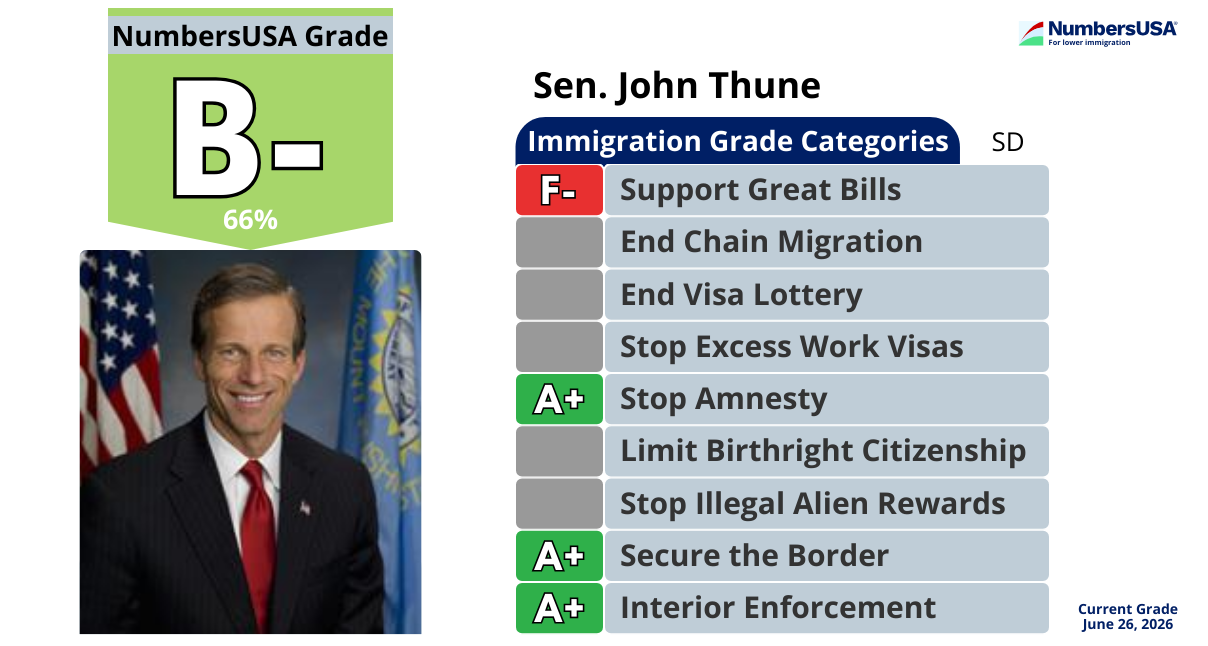
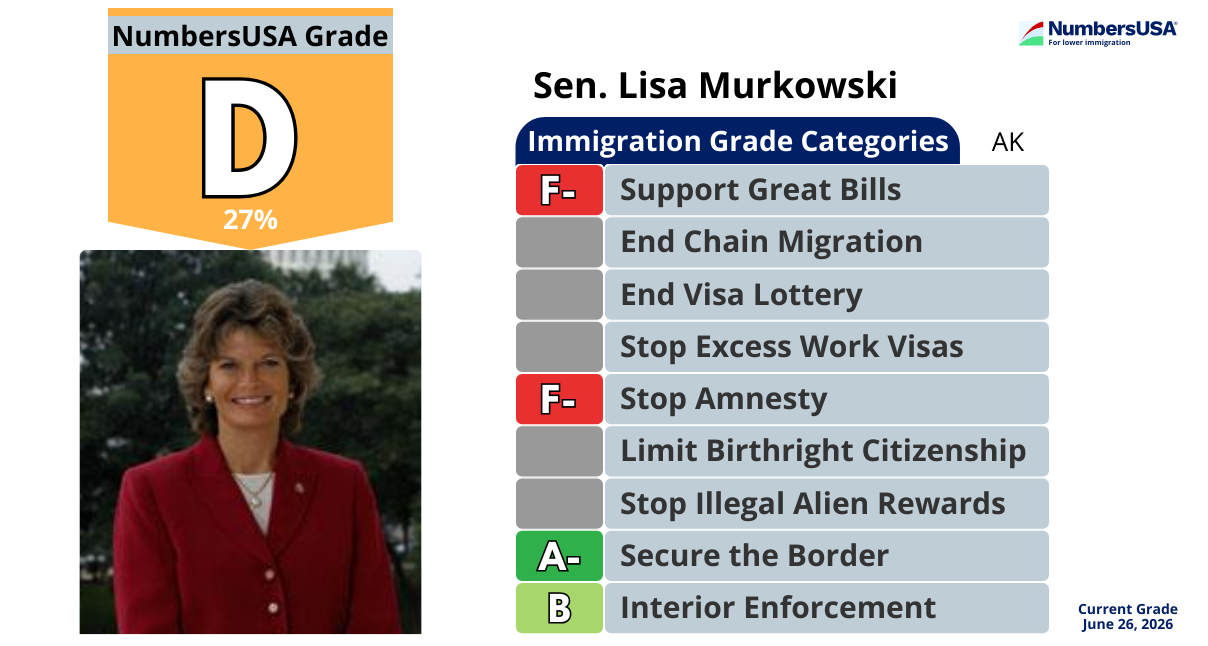
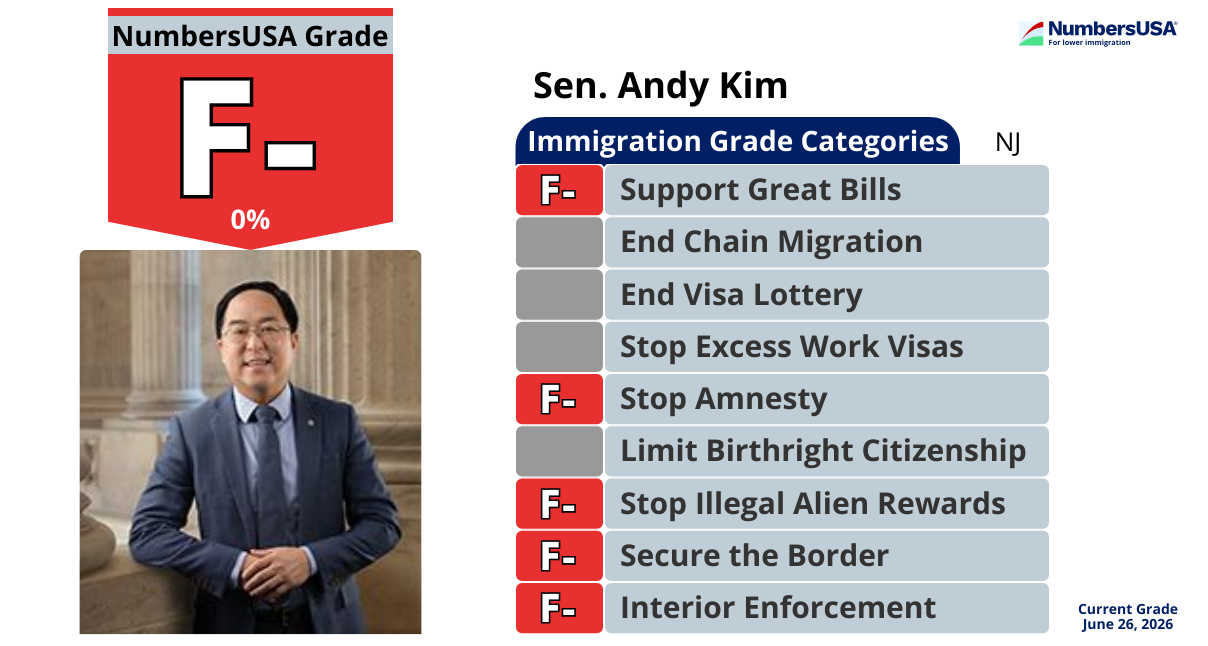
That is precisely what H.R. 251, the Legal Workforce Act, and S. 1151, the Accountability Through Electronic Verification Act, are designed to accomplish. Both bills would require every U.S. employer to use E-Verify to confirm that new hires are legally authorized to work, phasing the requirement in over time and making it permanent in federal statute.
E-Verify is the single most effective tool Congress has for shutting off the jobs magnet that drives illegal immigration in the first place. The Penn Wharton Budget Model has estimated that a national mandate would raise wages for low-skill American workers by roughly 5 percent. The Center for Immigration Studies has long described E-Verify as the most consequential enforcement multiplier available.
The bill that becomes law cannot be undone by the next administration with the stroke of a pen. The executive enforcement that exists today can.
Not Your Members? | Create Account or Log In to manually enter your address.