Facebook
 Post
Post
 Email
Email
 Print
Print
If increased immigration enforcement is creating economic opportunities for legal workers, the fragility of those gains are on full display in sanctuary cities across the country.
- Gov. Hochul is working to make New York the largest sanctuary state in the country after telling inadmissible migrants to “go somewhere else” as recently as 2023.
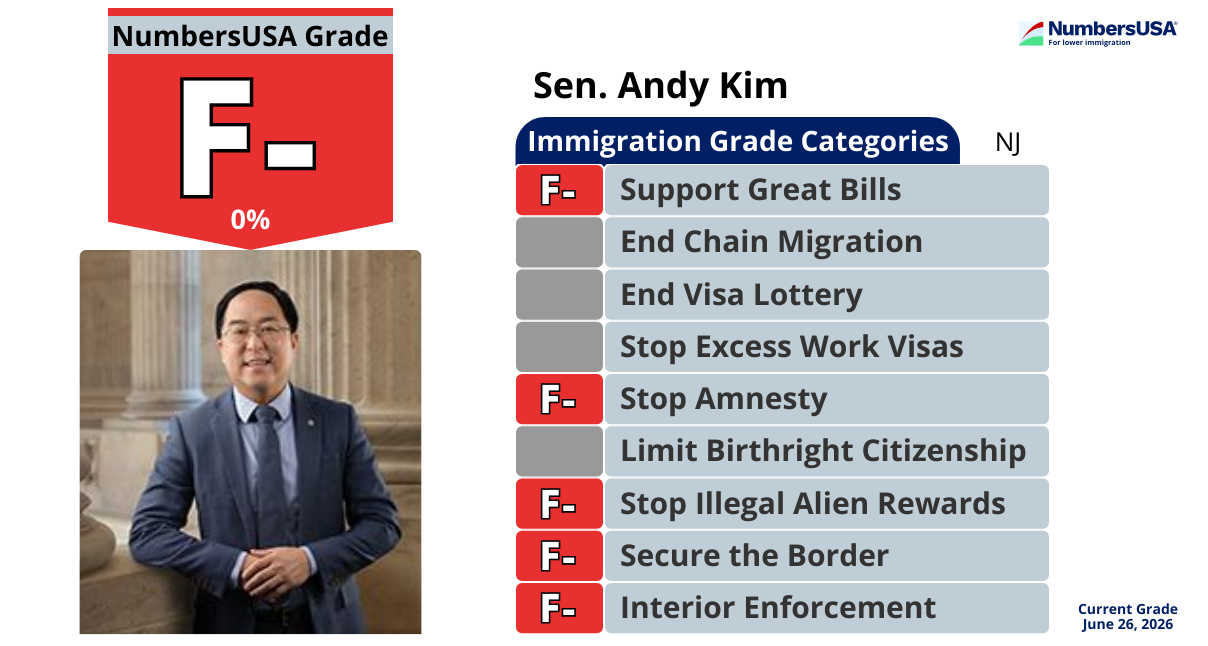
- In New Jersey, which has already passed multiple sanctuary laws, Gov. Sherrill, Sen. Kim, and Rep. Menendez are seeking to shut down the only large detention center in the state.
- In Maryland, Gov. Moore is allowing two sanctuary bills to become law even after he expressed concerns.
A recent Harvard/Harris poll found that 67% of Americans want state and local officials to cooperate with ICE on deporting criminal illegal aliens, and 67% say local jails should hand criminal illegal aliens over to ICE for deportation — a supermajority of the American people is demanding precisely the kind of cooperation that sanctuary policies actively forbid.
After Minneapolis, A Pendulum Swing
“A fundamental shift happened in the country on immigration after Minnesota,” according to Muzaffar Chishti of the Migration Policy Institute.
In the aftermath of the 2024 election and border crisis, many Democrats were wary of confronting the immigration issue. Nearly half of Democratic voters believed that the unpopular surge in illegal immigration was intentional. Center-left political scientists like Ruy Teixeira urged the party to embrace “immigration realism” that recognized borders and the need for enforcement. Some Democrats joined Republicans to pass the first bipartisan immigration enforcement bill in twenty years, the Laken Riley Act.
The Trump Administration entered office with broad public support for immigration enforcement, including large-scale removals of illegal aliens. In response to the growing number of anti-enforcement policies, the administration is considering plans to halt international processing at airports within sanctuary jurisdictions.
But the Administration has been slow to embrace what Mark Krikorian calls “Briefcase Enforcement” — particularly E-Verify mandates and employer accountability. It was never going to work to put the burden of reversing the border crisis on a single agency. And when two Americans, Renée Good and Alex Pretti, were killed while ICE pursued enforcement in a hostile sanctuary city, there was a profound shift in public opinion and amongst Democratic officials.
Overcorrections Misread Public Sentiment
Support for enforcement remains high, but trust in the agency that has been the face of that enforcement has dropped. Americans don’t like chaos whether it’s under a bridge in Eagle Pass, or a suburban street corner in Minneapolis.
The Trump Administration, if it wants to achieve its goal of restoring credible enforcement, will have to use all the tools in the toolbox, especially those that secure the workplace and hold employers accountable for illegal hiring.
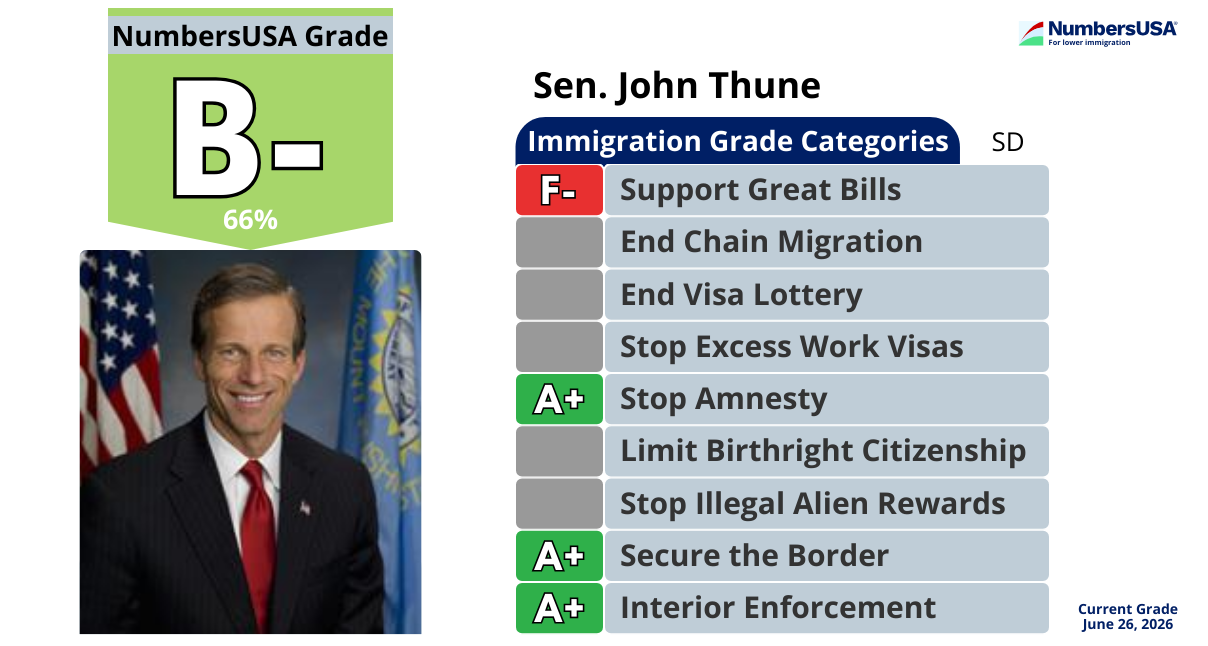
Democrats, meanwhile, have not acted on the nuance in the polling. In New Jersey, for instance, it is telling that Sherrill, Kim, and Menendez and U.S. House Minority Leader Hakeem Jeffries are not calling for improved conditions at the detention center (the U.S. has a responsibility to provide humane treatment to detainees, and the question of conditions within the facility is an ongoing story). Instead, they have moved immediately to shut it down.
Meanwhile, Representative Ro Khanna (D-CA) declared that Democrats who supported the bipartisan Laken Riley Act should be disqualified for running for president. Not two years after the end to the largest wave of illegal immigration in history, Khanna wants the next Democratic president to sign an amnesty within the first six months of office. As for enforcement, Khanna says “abolish ICE—first of all—tear it down.“
New polling from the Washington Post indicates that Democrats are dangerously out of step with mainstream voters on immigration. A plurality of Democratic voters want the part to move toward the center, according to a New York Times poll. Yet the pattern of obstruction continues across sanctuary cities and states in a resurgence of Biden-era policies.
Most voters want immigration limits to have meaning. They want the laws enforced with a quiet competency. Instead, they are experiencing whiplash from one border surge to another enforcement surge (not the “briefcase” kind) and back again to anti-enforcement policies.
The pendulum will continue to swing until Congress provides lasting reform.
Not Your Members? | Create Account or Log In to manually enter your address.