Facebook
 Post
Post
 Email
Email
 Print
Print
Every rule Trump signs, a future president can erase. The blueprint for lasting reform already exists.
The limits of executive power are on full display:
- The Department of Homeland Security finalized a rule that will help reduce visa overstays. The Trump Administration proposed nearly the same rule in 2020 before the Biden Administration rescinded it.
- Homeland Security also restored broader authority for officers to consider whether an immigrant is likely to become a public charge—undoing another Biden-era rule.
- And Homeland Security introduced a new rule to reduce abuse of the asylum system, one that will almost certainly face litigation and could be discarded by the next administration.
One president makes a rule; another president rescinds it. The pendulum swings and Americans get whiplash.
Stability requires Congressional action.
We don’t have to create the blueprint for lasting legislative reform; we already have it. The late Barbara Jordan laid it out for any Congress with the tenacity and courage to advance it.
Roy Beck, founder of NumbersUSA and author of Back of the Hiring Line (now in its second edition) writes in Commonplace:
“Jordan’s commission recommended fewer admissions while prioritizing spouses, minor children, skills, and needs that were, above all, the American community’s needs. The proposed system would give anyone in the world who met the criteria a chance, regardless of race, color, or creed—but the numbers would also be limited in order to serve the national interest.”
Jordan understood that immigration policy is about people—those who hope to come here, but first and foremost, the Americans competing for jobs and trying to raise families. This era of mass immigration has not been kind to workers who live off their paychecks. Real wages have stagnated while economic inequality has widened.
Jordan’s policy blueprint, Roy writes, “could have corrected most of the anti-worker immigration mistakes of the 1965, 1986, and 1990 immigration laws”:
“Jordan was emphatic that ‘deportation is crucial’ in any country’s immigration system. For a system ‘to be credible, people actually have to be deported at the end of the process,’ she told a congressional committee. But she also demanded humane treatment in all dealings with the foreign born, legal or not.
“The commission’s greatest enforcement passion was in insisting that employers behave legally. ‘As long as U.S. businesses benefit from the hiring of unauthorized workers, control of unlawful immigration will be impossible,’ Jordan said.”
Jordan had the president, the public, and a bipartisan commission behind her. But her blueprint threatened powerful interests.

Roy’s article was a featured link on Real Clear Politics. In it, Roy traces a line from Frederick Douglass to Booker T. Washington, A. Philip Randolph, Coretta Scott King, and Barbara Jordan—leaders who made the same pro-worker argument for more than a century and encountered many of the same well-funded opponents.
Jordan’s work – our work – is unfinished business.
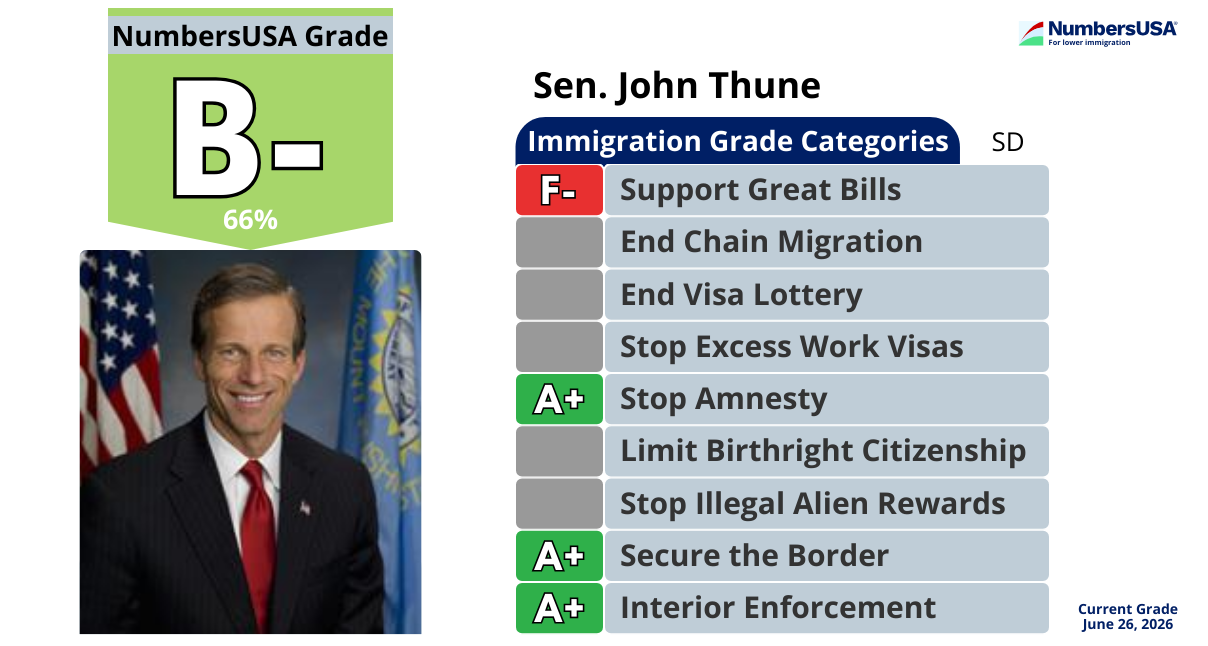
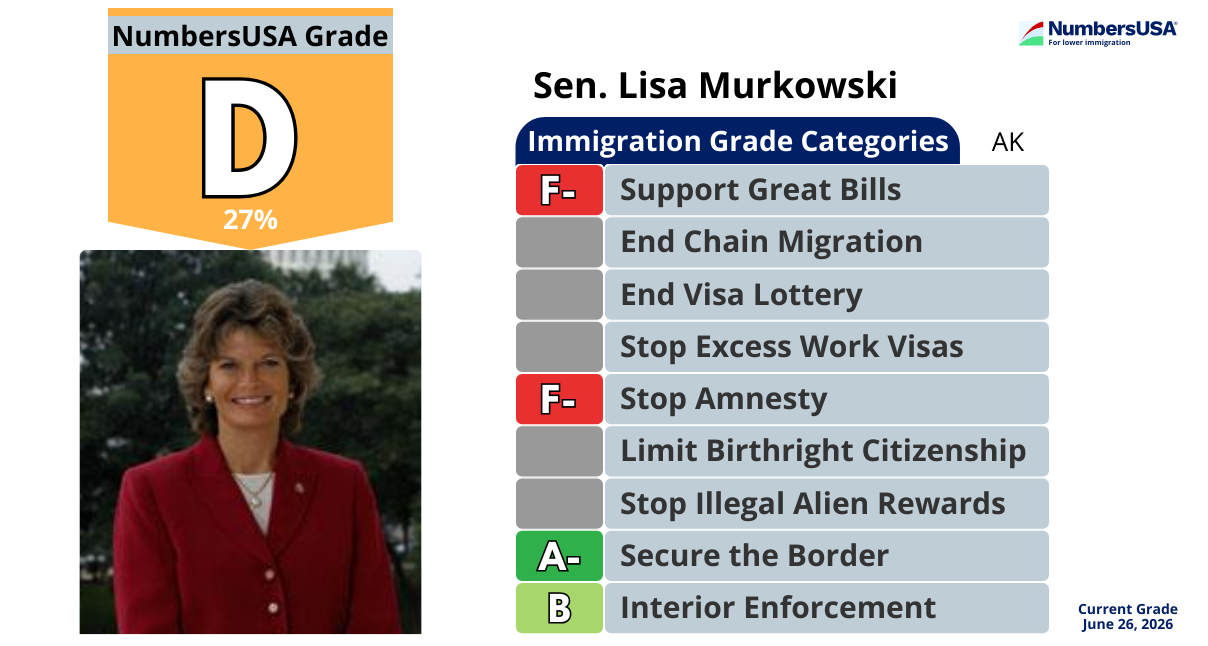
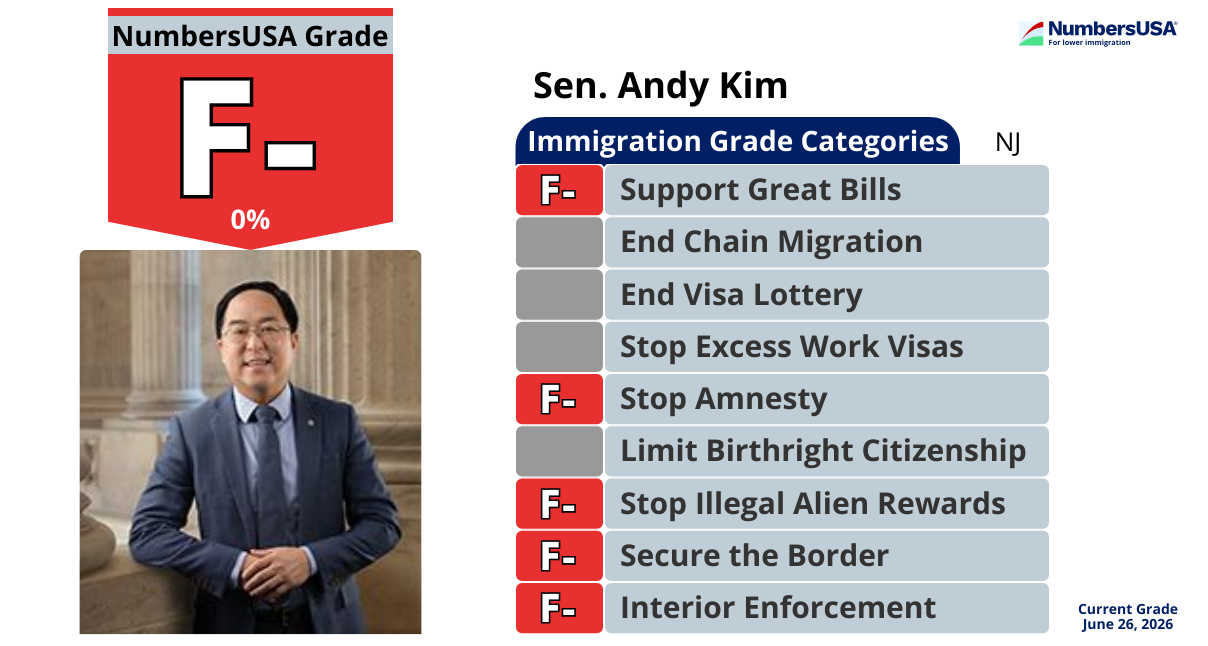
Since her death, Jordan’s party has steadily abandoned her blueprint – slowly, at first, and then like a rushing river. Ninety-seven percent of Democrats in Congress have a failing Immigration-Reduction Grade Card as of this writing. Only one Democrat – Rep. Ed Case (HI) – has cosponsored our E-Verify Great Solution bill.
Republican Lamar Smith (TX) continued to champion Jordan’s key recommendations after her death. But his own party’s leadership blocked his E-Verify bill after he ushered it through the Judiciary Committee. For three decades now, Republicans have repeatedly won majorities by running on immigration only to deliver a few symbolic victories and stall.
Barbara Jordan is gone, but we can take up her blueprint and be the voice for an immigration system that is fair to the people who wish to come, and prioritizes all Americans’ wages and opportunities.
The question for this Congress is: If not now, when?
Not Your Members? | Create Account or Log In to manually enter your address.