Facebook
 Post
Post
 Email
Email
 Print
Print
A Housing Crisis—and a Missing Question
Congress recently passed the bipartisan 21st Century ROAD to Housing Act by an overwhelming 396–13 vote. Supporters describe the legislation as a long-overdue response to America’s housing affordability crisis, encouraging homebuilding while limiting large corporate ownership of single-family homes.
There is no question that housing affordability is a real problem. Home prices and rents have risen faster than incomes in many parts of the country, putting homeownership out of reach for many families.
But the debate surrounding the bill overlooks a critical question: What is driving the demand that policymakers are trying to accommodate?
In recent years, immigration has become the primary source of U.S. population growth.
From 2021–2025, net immigration (legal and illegal combined) exceeded eight million people – a record – according to Congressional Budget Office estimates. That translates into additional housing demand through household formation and increased competition within existing housing markets. Yet the legislation focuses almost entirely on increasing supply while largely ignoring the demand side of the equation.
The Land Requirement
Housing analysts estimate the United States faces a shortage of roughly 4 to 5 million housing units. At typical suburban densities of three to four housing units per acre, accommodating that growth could require roughly 1 to 1.7 million acres of additional development. This is equivalent to paving over an area larger than Delaware and approaching the size of Connecticut. That estimate does not include the roads, utility corridors, schools, shopping centers, and other infrastructure that inevitably accompany residential growth.
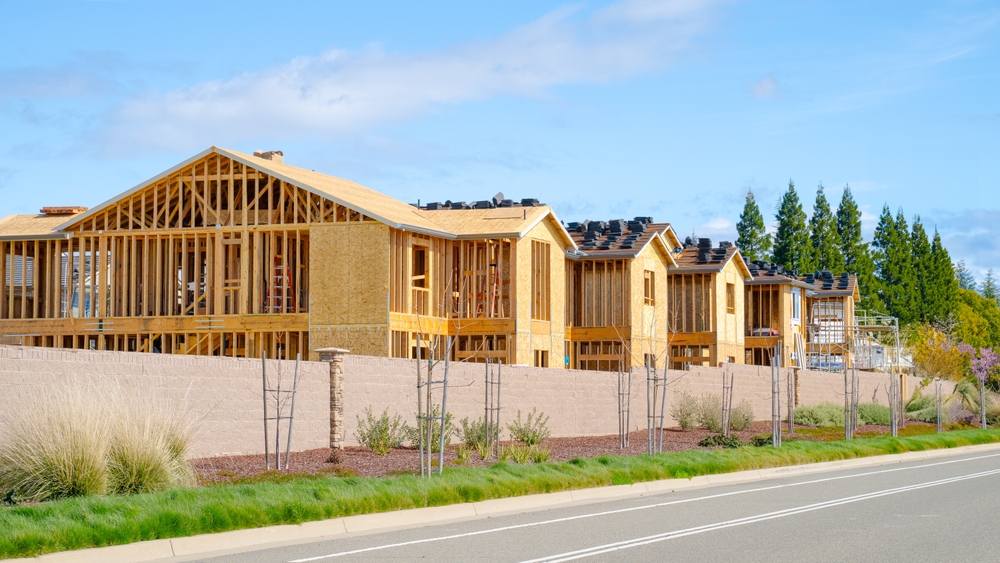
As housing demand rises, developers build more homes, local governments extend infrastructure, and development spreads outward into previously undeveloped areas.
Back to our original question. What are policymakers trying to accommodate? The answer appears to be mass immigration.
Conservation Meets Development Pressure
The environmental consequences are visible across the country. Productive farmland is converted into subdivisions. Forests are cleared. Wetlands are filled. Wildlife habitat becomes increasingly fragmented by roads, utility corridors, and commercial development. Water demand rises as new neighborhoods require additional infrastructure and services.
At the same time, conservation organizations are working to preserve farmland, restore habitat, and protect open space. These efforts are worthwhile and deserve support. The problem is that they often operate against development pressures that continue to expand the nation’s built footprint.
This creates an uncomfortable contradiction. Policymakers fund farmland preservation programs, habitat restoration projects, and endangered species recovery efforts while simultaneously supporting policies that accommodate continually increasing housing and infrastructure demand without fully examining the environmental consequences.
Meanwhile, the legal immigration system grants lawful permanent residence (i.e., “green cards”) to more than one million immigrants annually (e.g., in FY 2023, 1.17 million). In addition, millions of temporary visas are issued each year for workers, students, exchange visitors, and other nonimmigrants.
The Missing Half of the Debate
Housing affordability cannot be separated from demand. If policymakers focus exclusively on increasing supply while ignoring the factors driving housing demand, the nation will remain trapped in a cycle of construction, infrastructure expansion, and land conversion.
Conservationists understand that habitat loss is often irreversible. Once farmland is paved over, wetlands filled, or forests fragmented, restoration becomes difficult, expensive, or simply not possible.
Congress may have passed a housing bill, but it did not address the question at the heart of the affordability crisis. Until policymakers are willing to examine both supply and demand, building more homes serves only as a stopgap response that accommodates immigration-driven housing demand rather than addressing the forces creating that demand.
Find the latest updates and actions on your Action Board.
Not Your Members? | Create Account or Log In to manually enter your address.