Facebook
 Post
Post
 Email
Email
 Print
Print
The Vote Was About More Than Immigration
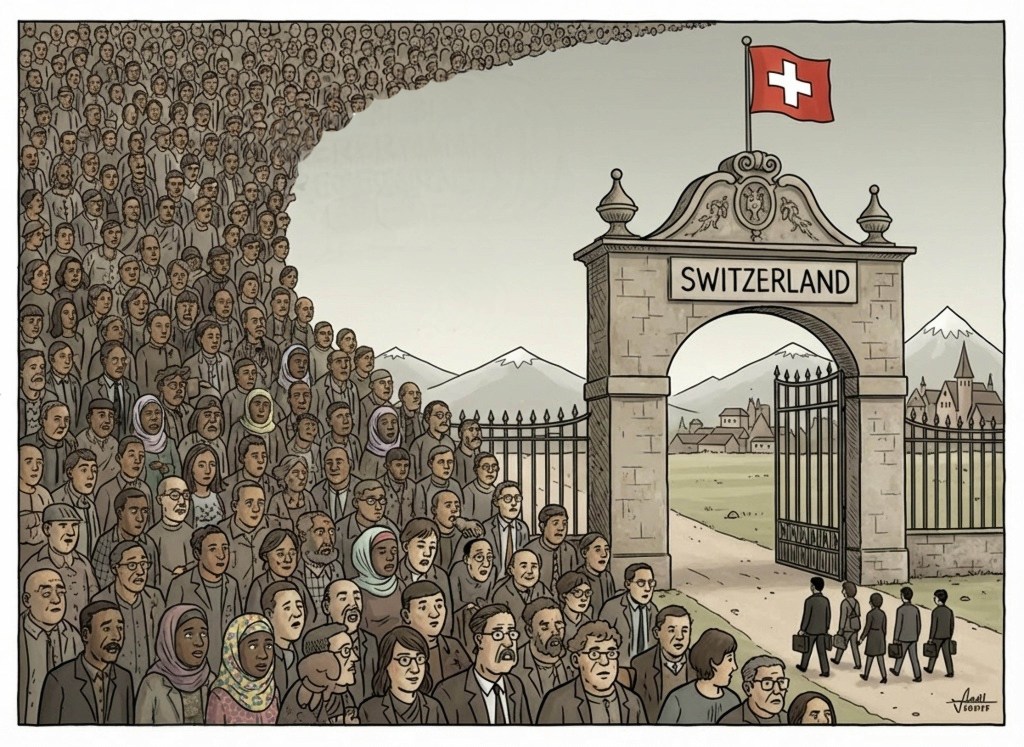
On June 14, 2026, Swiss voters came surprisingly close to approving a measure designed to limit future immigration-driven population growth by capping the nation’s permanent-resident population below 10 million people through 2050.
The proposal ultimately failed, with roughly 55% voting against it and 45% voting in favor. Turnout approached 59%, significantly higher than the Swiss average. Support was strongest in rural areas, while opposition was concentrated in major cities.
Many media accounts portrayed the result as a rejection of immigration limits. But the more significant story is that nearly half of Swiss voters supported a population cap in one of the world’s most prosperous and stable countries.
The EU Clause Changed the Outcome
The referendum was not simply a vote on immigration. It also included a provision that could have forced Switzerland to abandon its free-movement agreement with the European Union if the population cap were exceeded.
Government officials, business groups, and many opponents argued that the proposal could jeopardize Switzerland’s economic relationship with the European Union. As a result, some voters who were concerned about rapid population growth ultimately voted against the measure.
In effect, voters were asked to choose between moderating high levels of immigration and risking broader economic disruption. Had the proposal been presented without that trade-related provision, the outcome might have been very different.
Growth Has Consequences
Supporters argued that sustained immigration was placing increasing pressure on housing, transportation systems, public services, natural resources, and Switzerland’s traditional quality of life.
Campaign advertisements highlighted traffic congestion, rising housing costs, crowded infrastructure, and the gradual urbanization of landscapes that many Swiss residents value.
These concerns are hardly unique to Switzerland. Across the developed world, governments often emphasize the economic benefits of population growth while paying less attention to its negative impacts on housing affordability, infrastructure capacity, water supplies, environmental quality, and overall quality of life.
Every additional resident requires housing, roads, utilities, schools, and public services. As mass immigration increases the number of residents, demand for land, water, housing, and infrastructure rises as well.
Conservation Struggles Against Rising Demand
The environmental costs of immigration-driven population growth are substantial.
Conservation organizations spend billions of dollars protecting wildlife habitat, preserving farmland, restoring wetlands, and improving water efficiency. Yet many of those gains are offset as population growth generates additional demand for housing developments, roads, utilities, and commercial infrastructure.
The same tension between conservation and growth is evident in the United States. Immigration has become the primary driver of national population growth, increasing demand for housing, water, roads, and other infrastructure. As a result, conservation efforts increasingly compete with development that converts farmland, wildlife habitat, and open space to residential and commercial uses.
When population growth is driven largely by immigration policy, our leaders have the ability to address both supply and demand.
What Switzerland’s Vote Really Means
The Swiss referendum did not pass. But the vote demonstrated that concerns about high levels of immigration extend well beyond economics and labor markets.
Many voters viewed continued growth as a quality-of-life issue affecting housing affordability, congestion, infrastructure capacity, environmental protection, and community character.
The lesson from Switzerland is not that population limits were rejected. It is that nearly half of voters were willing to support them despite warnings of significant economic consequences. That suggests the conversation about immigration-driven population growth, resource demand, and quality of life is far from over.
Find the latest updates and actions on your Action Board.
Not Your Members? | Create Account or Log In to manually enter your address.