Facebook
 Post
Post
 Email
Email
 Print
Print
Every illegal entry, visa overstay, and birth tourism visit carries a citizenship multiplier.
On June 30, 2026, the Supreme Court blocked the United States from joining nearly every other industrialized nation in ending automatic birthright citizenship for children of illegal aliens and tourists.
Six of the nine Justices ruled that President Trump’s Executive Order violated federal law. Five ruled that it violated the 14th Amendment of the Constitution.
Last week, the Supreme Court gave us two major victories that cleared the way for the government to turn back migrants before they reach the border, and to terminate “Temporary” Protected Status designations that have shielded hundreds of thousands of illegal aliens.
After the birthright decision, the government is going to need all of the enforcement tools at its disposal.
On Tuesday, the court ruled that “Children born in the United States to parents unlawfully or temporarily present are ‘subject to the jurisdiction’ of the United States and are citizens at birth under the Fourteenth Amendment’s Citizenship Clause.”
The Court’s decision significantly impacts the government’s ability to manage immigration. Cartels, smugglers, and birth tourism agencies exploit birthright citizenship for their own gain while encouraging illegal entry, visa overstays and immigration fraud. They sell their clients on 13 years of free education, help with college tuition, a great quality of life, and the ability to sponsor the rest of the family for paths to citizenship after the child turns 21.
It’s against the law to cross the border illegally or to overstay a visa; birth tourists routinely deceive immigration agents – but birthright citizenship promises a reward for anyone in the world who gets a way with it.
Automatic birthright citizenship turns our immigration system into a game show. And the Supreme Court just signed America up for unlimited seasons.
In his dissent, Justice Alito described the ruling as “saddling the Nation with a medieval rule”:
“This is one of the most important decisions in the history of the Court, and in my judgment, the Court has made a serious mistake….
“….Suppose that a person’s only connection to this country is that he was born here to a mother who was present just long enough to give birth and then quickly returned to her native country. Suppose that country is a strategic adversary or enemy of the United States… According to the Court, that person is a citizen of the United States. He can enter and leave the country as he pleases. He can travel the world on a United States passport.”
The ruling means we have not yet measured the full impact of the Biden border crisis as every unauthorized migrant released into the interior has an opportunity to gain a U.S. citizen family member. This multiplier effect will apply to any future surges in illegal immigration, birth tourism and surrogacy. Until the policy is changed, each person who remains in the U.S. illegally can use birthright citizenship to tie them to the country and eventually petition for the rest of the family to gain legal status and a path to citizenship.
In a separate dissent with Justice Gorsuch, Justice Thomas wrote:
“The Court’s decision to hold the Citizenship Order facially unconstitutional… makes it unlawful for the President to enforce the Order against a single person. He cannot enforce the Order against a child of an alien enemy or a child of a foreign spy. He cannot even enforce the Order against children who are raised in foreign countries, join foreign armies, and fight wars against the United States.”
“I am not sure that today’s opinion will stand the test of time,” Thomas declared, adding that it. “adds to the sad history of the Fourteenth Amendment, which was designed and understood to secure equal rights for the freed blacks but has instead been repurposed for political projects that the Reconstruction Congress did not support.
The policy is not sustainable in the age of modern travel. Annual tourism to the U.S. averaged a few hundred thousand in the early 20th century. Today, roughly 70 million people visit the U.S. every year. A century ago, a visit to the U.S. usually required a weeks-long journey. Today, a plane ticket will get you here in hours.
Roberts’ majority opinion doesn’t address the modern implications of birthright citizenship, which Roberts traces back to English common law.
All but two industrialized nations (the U.S. and Canada) have abandoned the practice. England limited birthright citizenship in 1983. The Court’s ruling ensures that we will remain behind most of the modern world for years to come.
The Legislative Branch Has Work To Do
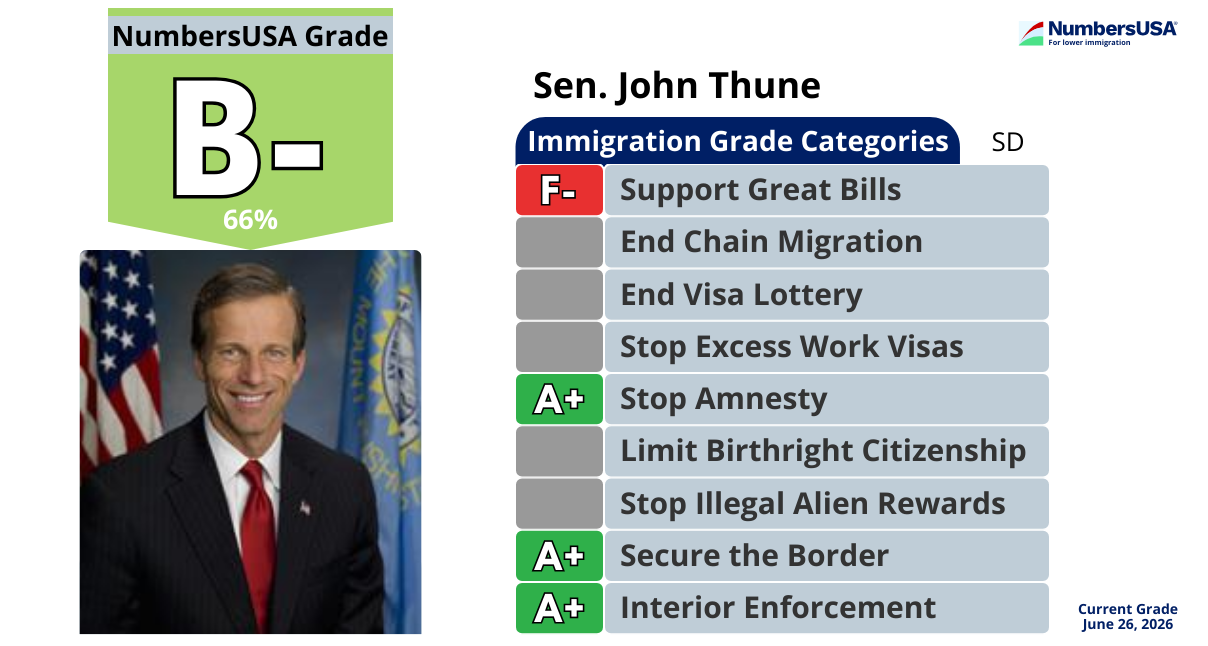
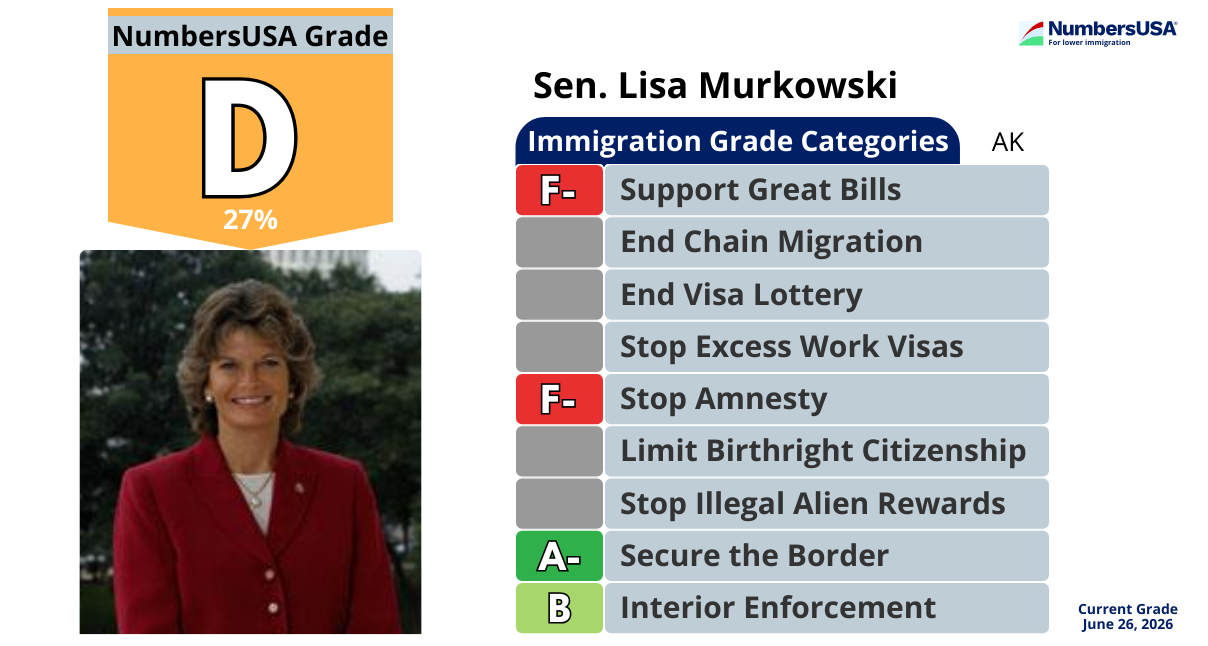
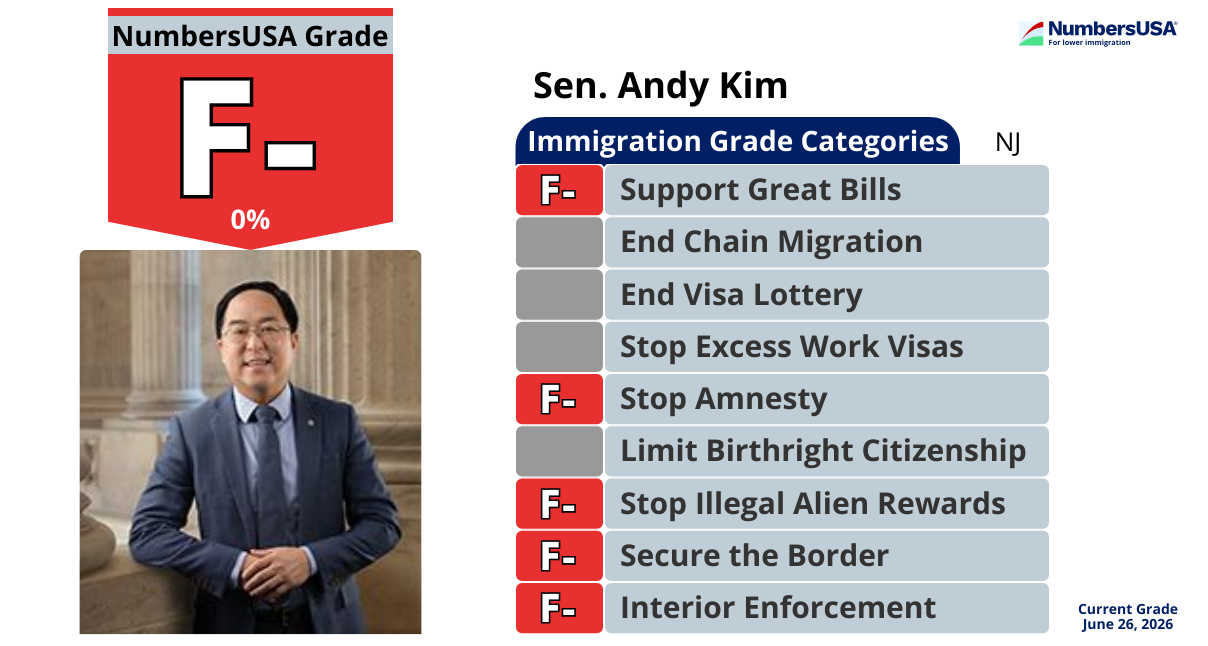
Congress is a co-equal Branch of government but has not passed a substantive immigration reform since the Laken Riley Act in January of 2025. Legislators’ job is to write bills, not social media posts. It’s time for Congress to get out of the back seat and get behind the steering wheel.
There are over a dozen great immigration bills waiting for a vote right now. In addition, Speaker Johnson has promised a vote on a great border security package (H.R. 2 in the last Congress) that the House has yet to revive in this Congress.
When they return from the July 4th recess, Members of Congress need to get to work. We will continue to grade their individual efforts – grades are updated every week.
The fight for a modern birthright citizenship policy isn’t over.
Justice Kavanaugh explicitly gave Congress a roadmap:
“If Congress amends §1401(a) or otherwise enacts a statute creating new exceptions along the lines of the Executive Order for children born to foreign citizens unlawfully or temporarily in the country, such a statute, as I see it, would pass constitutional muster.”
Stay tuned.
Not Your Members? | Create Account or Log In to manually enter your address.