Facebook
 Post
Post
 Email
Email
 Print
Print
The Democratic National Committee approved a resolution to abolish ICE, end detention, and release migrant detainees.
The DNC sent a dangerous message to American workers this week. We’re counting on those of you with Democratic Members of Congress to send a message back. And those of you represented by Republicans have a part to play in this campaign, too.
The DNC vote, which took place on August 15th, does not automatically change the party’s platform — that will be determined at the 2028 convention. Members also passed a competing resolution calling for reforms to ICE rather than its abolition. But the abolition vote comes on the heels of the Democratic Socialists of America affirming their commitment to abolishing ICE and U.S. borders, and more Democrats are adopting that position as well.
That isn’t to say that ICE shouldn’t be held to a high standard. It is the government’s responsibility to ensure the humane treatment of people we arrest, detain, and deport. It is also true that we cannot deport our way out of the calamitous results of the border crisis.
The Real Alternative is Also the Only Winning Strategy
Abolishing ICE would be a radical step toward open borders. Tackling the border crisis with ICE alone is an unsustainable strategy. But these aren’t the only two options.
The entire burden of the border crisis cannot be placed on the shoulders of the men and women of Immigration and Customs Enforcement. We have to take the illegal jobs away to encourage more people to return home on their own.
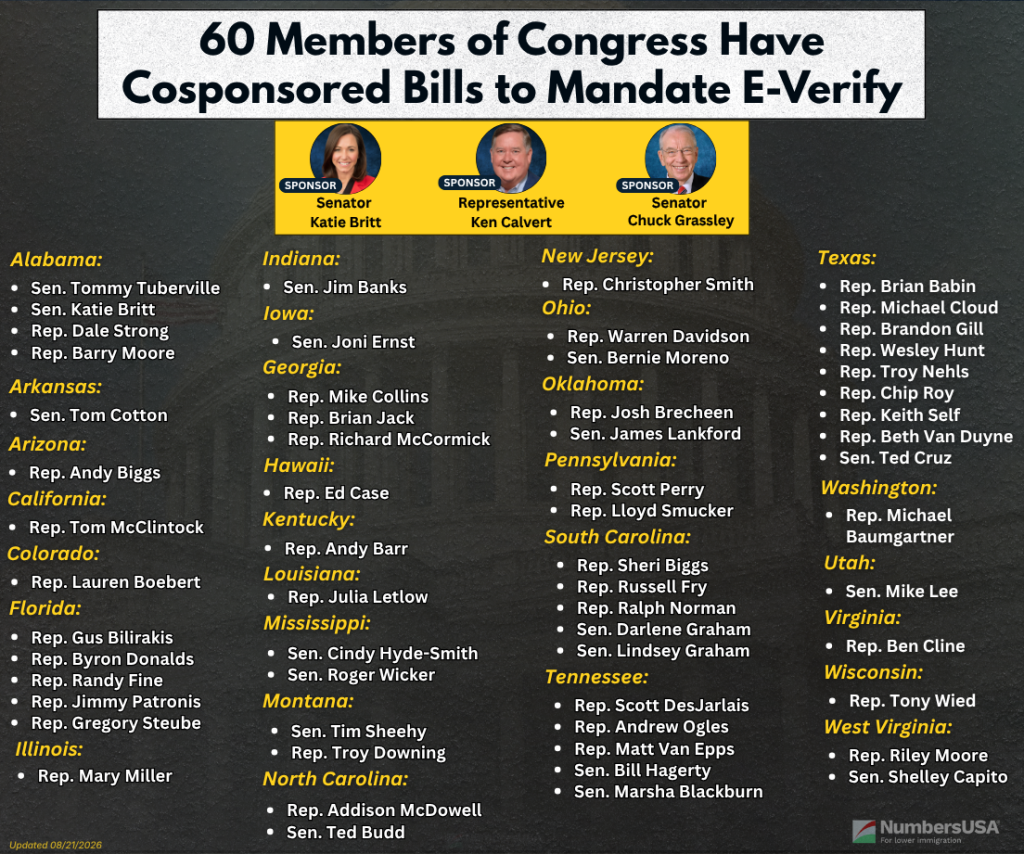
A credible enforcement system would start with workplace verification and remove the economic incentives to remain in the country illegally. The reality is that most members of Congress aren’t committed to cracking down on illegal hiring.
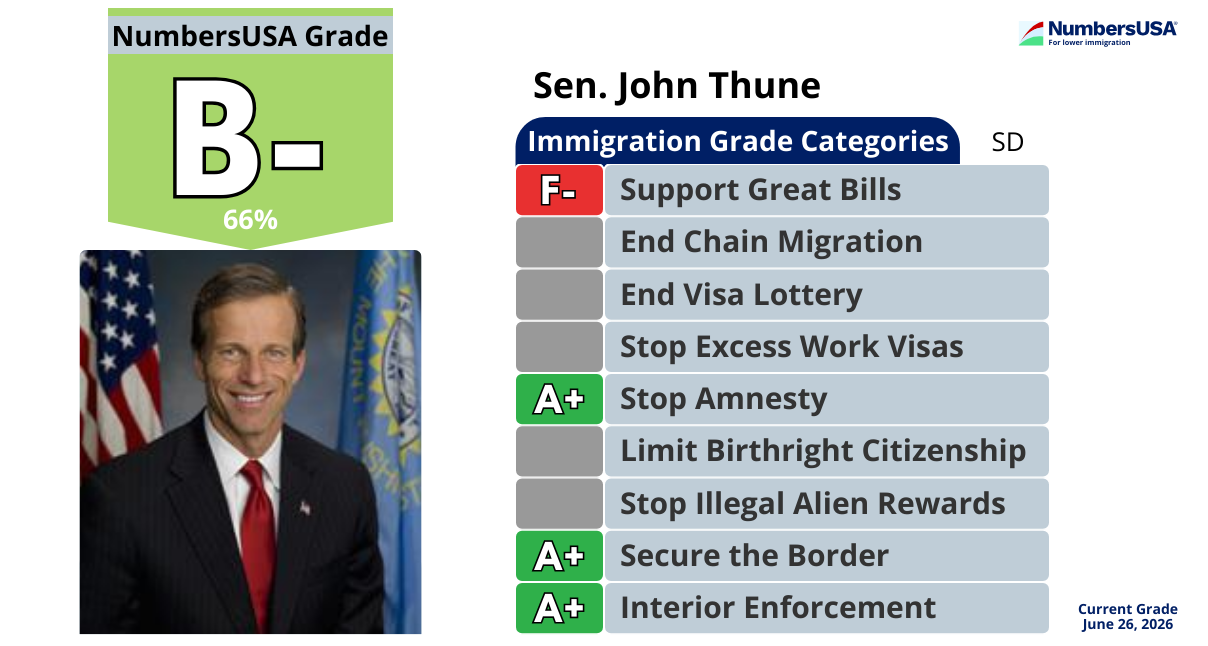
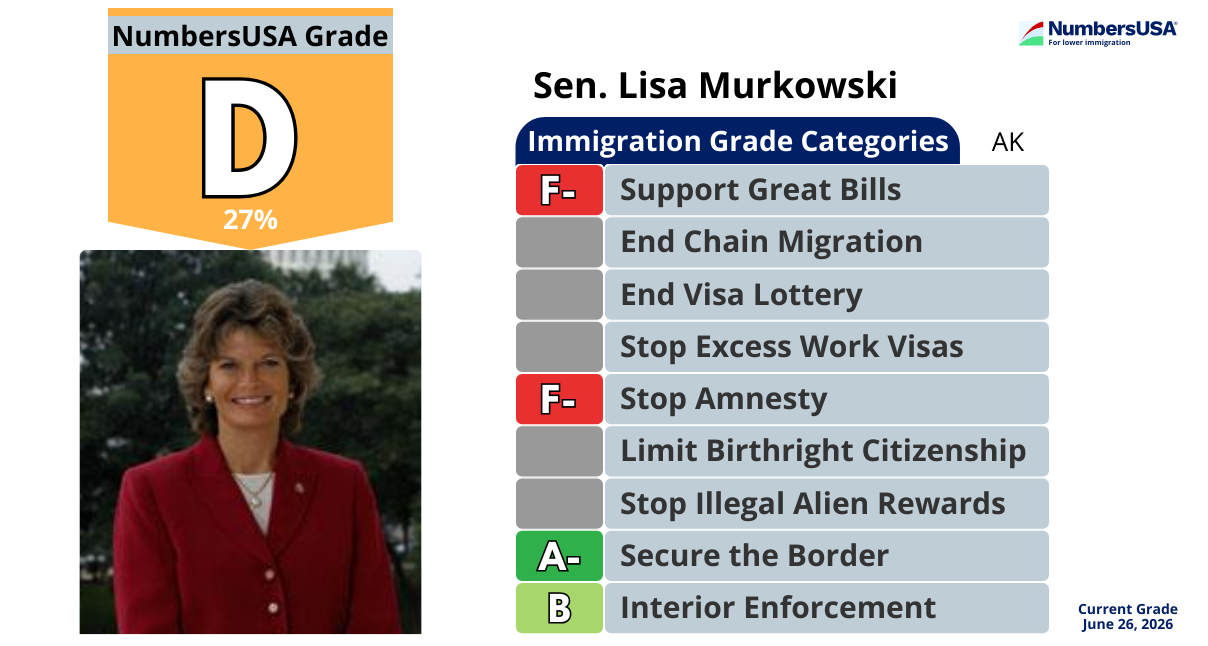
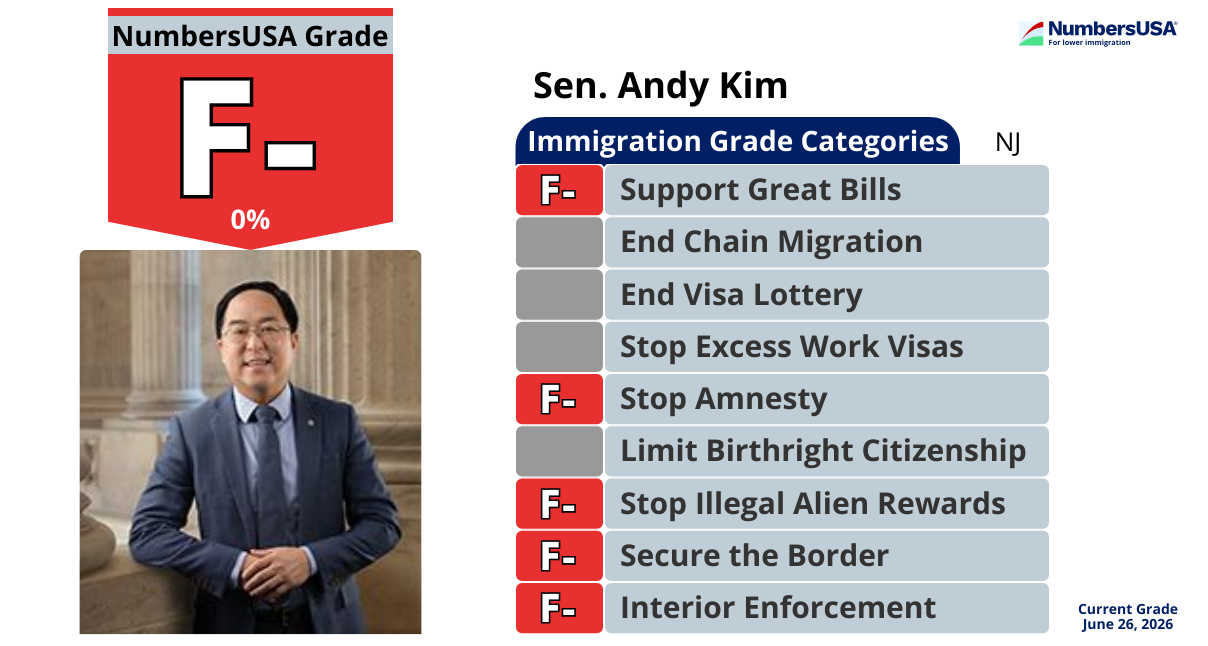
Are your 3 Members of Congress on this list?
Elections
In the most talked-about primary this week, Florida state Rep. Angie Nixon upset Lt. Col. Alex Vindman in the Democratic Senate primary. Nixon, a member of the Democratic Socialists of America, ran on a “fight for working families” plan that would let illegal workers keep U.S. jobs. She will face Sen. Ashley Moody in the general election.
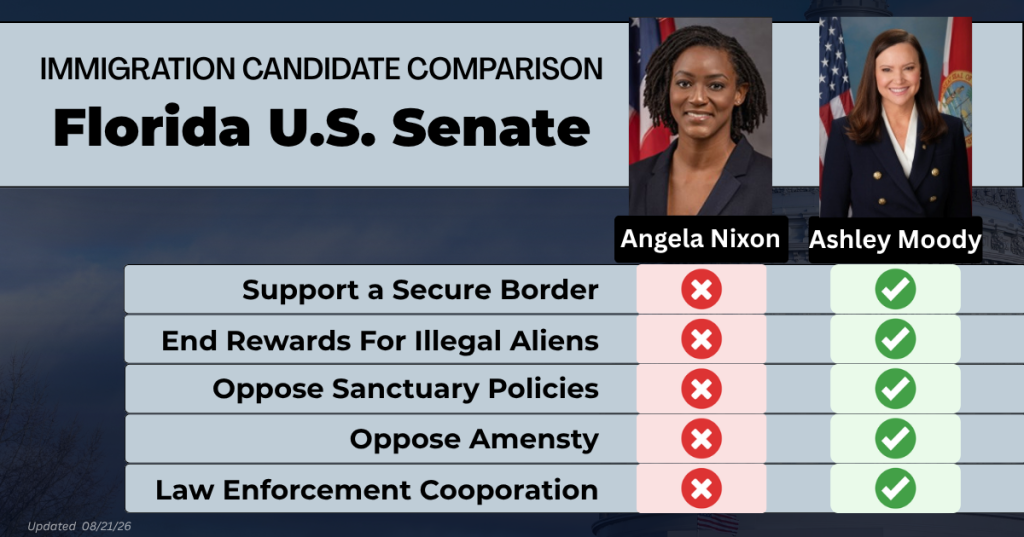
You can find all of our candidate comparisons here. There is still time left in many of these races for candidates to improve their stances. If your preferred candidate has room to grow, let them know! Share or download our candidate survey here.
NumbersUSA is a non-partisan organization and does not endorse candidates.
Marquee Races
Some of the races with serious immigration implications include:
- GA Senate – Ossoff (D-, the incumbent) vs Collins (A+ in House; sponsor of the SAFE Act).
- OH-9 – Kaptur (F, incumbent) vs Merrin (True Reformer, non-sitting).
- OH Senate – Husted (C, incumbent) vs Brown (F, former Senator)
- TX Senate – Paxton (True Reformer, non-sitting) vs Talarico (non-sitting).
- AK Senate open primary – Sullivan (C+, incumbent) vs Peltola (F, former Congresswoman)
- SC Senate primary runoff – Graham (B-, incumbent) vs Norman (A+ in House)
In Other News
Lake Mead is drying up and policymakers are asking farmers to produce less, homeowners to consume less and taxpayers to spend billions to reduce water demand. My colleague Henry Barbaro asks: Why isn’t Washington equally serious about immigration policies that continually increase water demand?
Bad Ideas
Congress isn’t short on terrible ideas. Here are two new head-smackers:
- Provide taxpayer-funded attorneys to all aliens in any immigration proceeding who claim they cannot afford counsel. (S. 5324)
- Defund enforcement of the public charge rule, which restricts admission and green cards for aliens likely to depend on taxpayer-funded welfare programs. (H.R. 10045)
A Look Ahead
After a bipartisan group of representatives successfully forced a vote on a backdoor amnesty earlier this year, Republican Representative Don Bacon and Democratic Representative Julie Johnson are pushing a similar bill.
The Afghanistan TPS Act of 2026 (H.R. 9899) would grant work permits and temporary status to Afghan nationals, regardless of whether they worked with American forces. Vetted interpreters with Special Immigrant Visas (SIV) are lawful permanent residents and do not need TPS, which Homeland Security terminated for Afghanistan in July 2025.
Instead of forcing a vote to extend work permits through July 1, 2029 to foreign workers who never qualified for Special Immigrant Visas, the House should be voting on the border package passed out of the Judiciary (H.R. 9773) to permanently secure the border.
This Week In Immigration History
August 22, 1996: President Clinton signed the Personal Responsibility and Work Opportunity Reconciliation Act of 1996 (PRWORA) into law.
The bill was aimed at “strengthening the principle that immigrants come to America to work, not to collect welfare benefits.” Under pressure from advocacy groups, however, the Clinton Administration diluted the impact by interpreting “means-tested public benefit” to only include “mandatory” welfare programs.
On December 16, 2025, the Office of Legal Counsel withdrew its opinion.
NumbersUSA In The News
The Journal of Blacks in Higher Education included Roy Beck’s Back of the Hiring Line in its latest roundup of New Books of Interest to African American scholars.
A Daily Caller reporter asked what we made of Meta steering users who search immigration topics toward resources for moving to a “new country.” I am concerned about platforms driving users toward an asylum system still riddled with the same loopholes that the 2021-2025 border crisis exploited.
And I told The Bill Martinez Show that Congress — in its failure to address illegal hiring — is partly to blame for the DNC’s resolution to abolish ICE. (1:51:25)
Not Your Members? | Create Account or Log In to manually enter your address.