Facebook
 Post
Post
 Email
Email
 Print
Print
A River System Reaches Its Limits
Negotiations over the future of the Colorado River have once again broken down. According to a front-page New York Times report, talks among the seven Colorado River basin states have stalled despite more than six months of negotiations and repeated efforts by the Trump administration to broker an agreement.
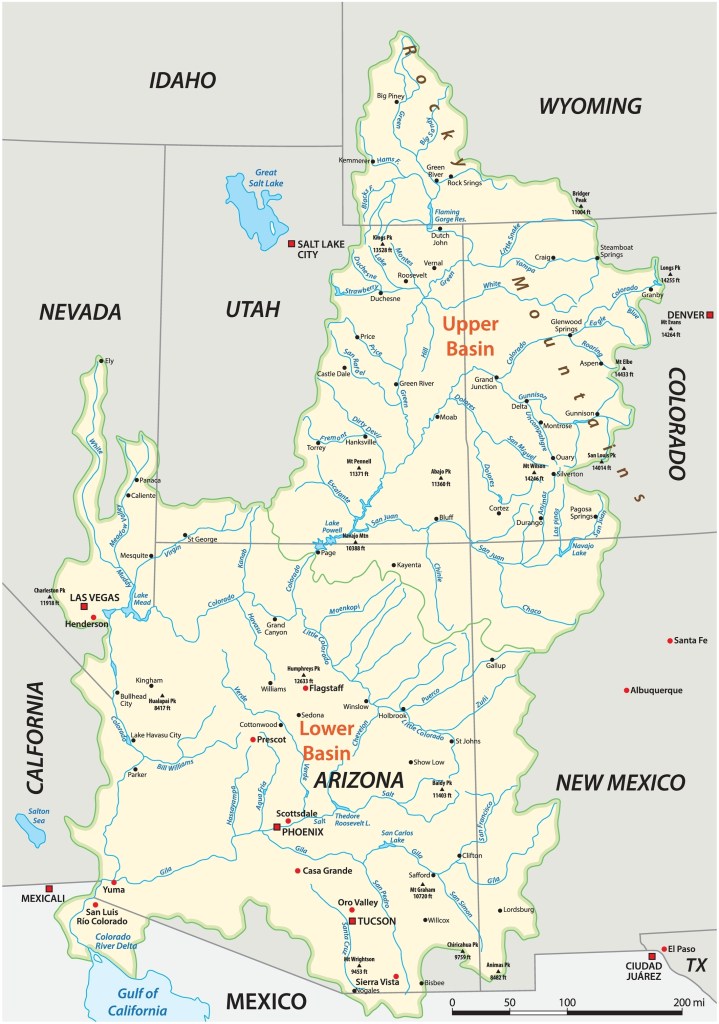
The Colorado River provides water to roughly 40 million people and irrigates approximately 5.5 million acres of farmland across the American West. Cities from Denver to Phoenix to Los Angeles depend on it for drinking water, while farmers rely on it to produce food consumed nationwide. Yet the river has been overallocated for decades, and prolonged drought and declining reservoir levels have placed increasing pressure on an already stressed system.
“The river’s system of reservoirs and canals was designed for the climate and population of a century ago,” the Times’ Scott Dance reports.
“It has strained to adapt to a declining water supply and enormous growth in communities in the river basin, despite improvements in efficiency that mean even booming cities are using less water than in the past.”
Most discussions focus on conservation, water efficiency, and disputes among the states that share the river. Although important issues, they address only part of the problem.
Conservation Can’t Outrun New Demand
Southwestern states have invested heavily in water conservation. Municipalities have restricted outdoor watering, encouraged drought-tolerant landscaping, repaired aging infrastructure, and promoted more efficient water use. Farmers have adopted improved irrigation practices and participated in water-saving programs.
These efforts have produced meaningful savings. Yet conservation gains are increasingly being offset by growing demand for water, housing, and infrastructure throughout the Southwest. In recent years, immigration has become the primary driver of U.S. population growth, fueling residential and commercial development in Sun Belt metropolitan areas that rely heavily on Colorado River water.
The Missing Piece of the Colorado River Debate
The Colorado River basin already faces difficult choices. States are debating how to divide shortages, how much each sector should conserve, and who should bear the costs of future reductions. Farmers, cities, tribes, wildlife managers, and state governments all have competing priorities.
Meanwhile, reduced river flows affect wetlands, riparian ecosystems, migratory bird habitat, and fish populations throughout the Southwest. As water becomes scarcer, the needs of wildlife and ecosystems increasingly compete with municipal and agricultural demands.
Every gallon conserved helps. But if immigration-driven demand for housing, development, and water withdrawals continues to rise, conservation efforts must work harder each year simply to maintain the status quo.
The Colorado River’s crisis is often described primarily as a supply problem. Indeed, drought and declining snowpack have reduced the amount of water available. But it is also a demand problem. Forty million people already depend on the river, while continued growth increases pressure on an already strained resource.
Addressing Both Supply and Demand
Long-term solutions require addressing both sides of the equation. Conservation, efficiency improvements, infrastructure investments, and interstate cooperation all remain essential. But policymakers should also recognize that continued growth in water demand places additional pressure on a river system that is already stretched beyond its limits.
As the primary driver of U.S. population growth, immigration has become an important part of the conversation about future water demand. Lower Basin States (California, Arizona and Nevada) have high rates of international migration, while Upper Basin States (Colorado, New Mexico, Utah and Wyoming) experience high rates of “secondary migration” from states receiving high numbers of immigrants.
NumbersUSA’s study on Colorado sprawl, for instance, documents:
“During the 1982-2017 period, Members of Congress more than doubled the national population growth that is driven by immigration policies. Besides the direct effect in Colorado, immigration policies appear to have created acute population pressures in some metropolitan areas across the country which may be driving residents to flee. California is the No. 1 state source of Colorado’s population growth.”
The Colorado River negotiations may have collapsed, but the underlying challenge remains. A century-old river management system is struggling to adapt to both a shrinking water supply and growing demand for water, housing, and development. Our leaders must address both supply and the additional demand that high immigration levels place on the Colorado River’s system of reservoirs and canals. Otherwise, conservation gains will become increasingly difficult to achieve and competition for one of America’s most important water resources will continue to intensify.
Find the latest updates and actions on your Action Board.
Not Your Members? | Create Account or Log In to manually enter your address.