Facebook
 Post
 Email
 Print
Conservation measures can protect threatened land, but continued population growth—driven primarily by immigration in recent years—creates additional pressure on America’s forests, farmland, and wildlife habitat.
According to the Trust for Public Land, voters across the country approved more than $19 billion in conservation funding commitments during the November 3 election to protect open space, farmland, wildlife habitat, and other natural resources.
These results reflect widespread support for preserving America’s natural landscapes. But they also raise an important question: Why must Americans continue spending billions to protect open space from development?
One important part of the answer is population growth.
Protecting Land While Development Pressures Continue
Several ballot measures illustrate how communities are responding to the loss of natural areas.
In Massachusetts, voters approved Question 6, establishing the Nature for All Fund, which supporters estimate could generate as much as $100 million annually to protect forests, farmland, wildlife habitat, and water resources. Colorado voters approved Proposition 137, directing additional revenue toward conservation and watershed protection.
In Pennsylvania, Delaware County voters approved a $120 million bond measure to protect natural areas, wildlife habitat, wetlands, and open space.
These measures can protect valuable resources for future generations. But they do not eliminate the demand for additional housing, roads, and infrastructure as populations grow.
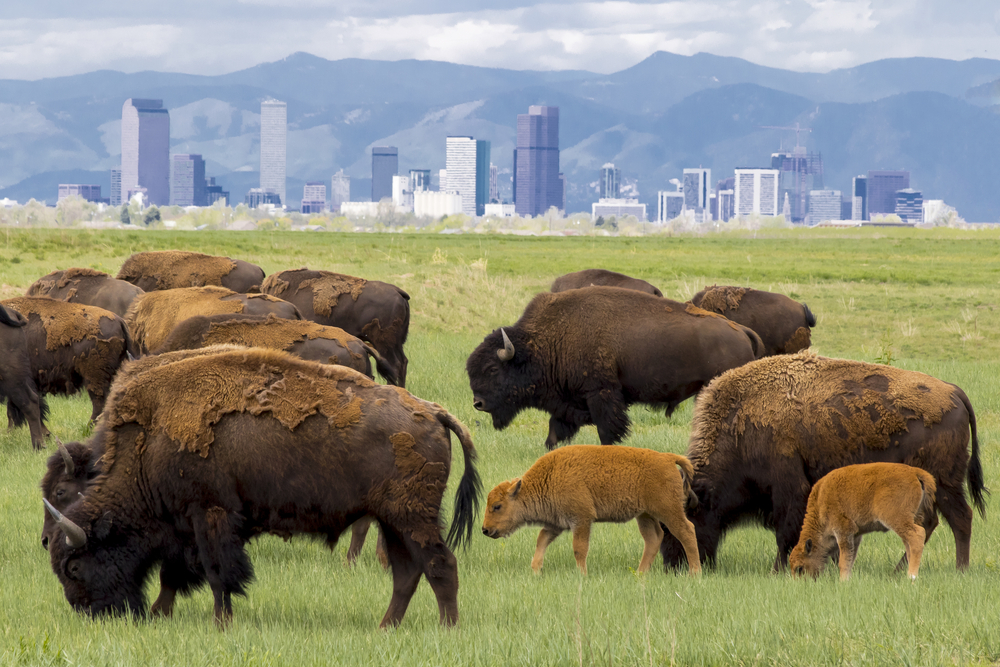
Bison herd at Rocky Mountain Arsenal National Wildlife Refuge, as Denver looms in the background.
Population Growth: A Major Driver of Sprawl
The connection between population growth and land development is documented in NumbersUSA’s National Sprawl Study.
Examining developed-land expansion across the United States between 1982 and 2017, the study attributed approximately 60% of sprawl to population growth and the remaining 40% to increasing per-capita land consumption. For the more recent 2002–2017 period, the study attributed approximately 67% of sprawl to population growth.
These findings challenge the notion that changes in development patterns alone can fully address the loss of open space.
Higher-density housing and redevelopment can reduce the amount of land consumed per resident. But as communities expand to accommodate growing populations, residential subdivisions, commercial centers, and roads continue to replace forests, farmland, wetlands, and other natural areas.
Immigration and America’s Population Growth
Immigration has contributed substantially to U.S. population growth for decades. In recent years, its contribution has become especially pronounced.
According to the U.S. Census Bureau, the nation’s population increased by approximately 1.8 million people between July 2024 and July 2025. Net international migration accounted for approximately 1.3 million of that increase, or about 72%.
Although immigration does not automatically cause urban sprawl, it contributes to the demand for housing and infrastructure. That demand must be accommodated somewhere, whether through redevelopment, increased density, or outward expansion.
Population growth increases demand for housing and infrastructure, while efforts to contain development within existing urban areas can conflict with Americans’ preferences for lower-density living and the rights of property owners to develop their land.
Reducing population-growth pressures offers a compelling way to curb the relentless conversion of open space to development.
The Ecological Costs of Continued Development
The consequences of sprawl extend beyond the acreage converted. Roads and subdivisions fragment wildlife habitat, interrupt ecological corridors, and isolate wildlife populations.
Over time, once-expansive natural landscapes can become islands of protected open space surrounded by development. Although these preserved areas retain ecological value, their isolation can diminish their ability to support wildlife and maintain healthy ecosystems.
Converting farmland to residential or commercial uses can also permanently reduce the land available for food production.
Protecting Open Space for the Future
The November election results demonstrate that voters in communities throughout America are willing to commit substantial public resources to conserving land and wildlife habitat.
These taxpayer investments to protect open space would likely be more effective if Congress moderated immigration levels, consistent with recommendations made by bipartisan federal commissions over recent decades.
Protecting open space requires more than preserving individual parcels. It also requires addressing the population-growth pressures that threaten the surrounding landscape.
Not Your Members? | Create Account or Log In to manually enter your address.