The Securing Agriculture’s Workforce Act Is the Biggest Foreign Guest Worker Expansion in Congress

 Published by
Joe Jenkins, Jeremy Beck
Published by
Joe Jenkins, Jeremy Beck
 Facebook
 Post
Post
 Email
Email
 Print
Print
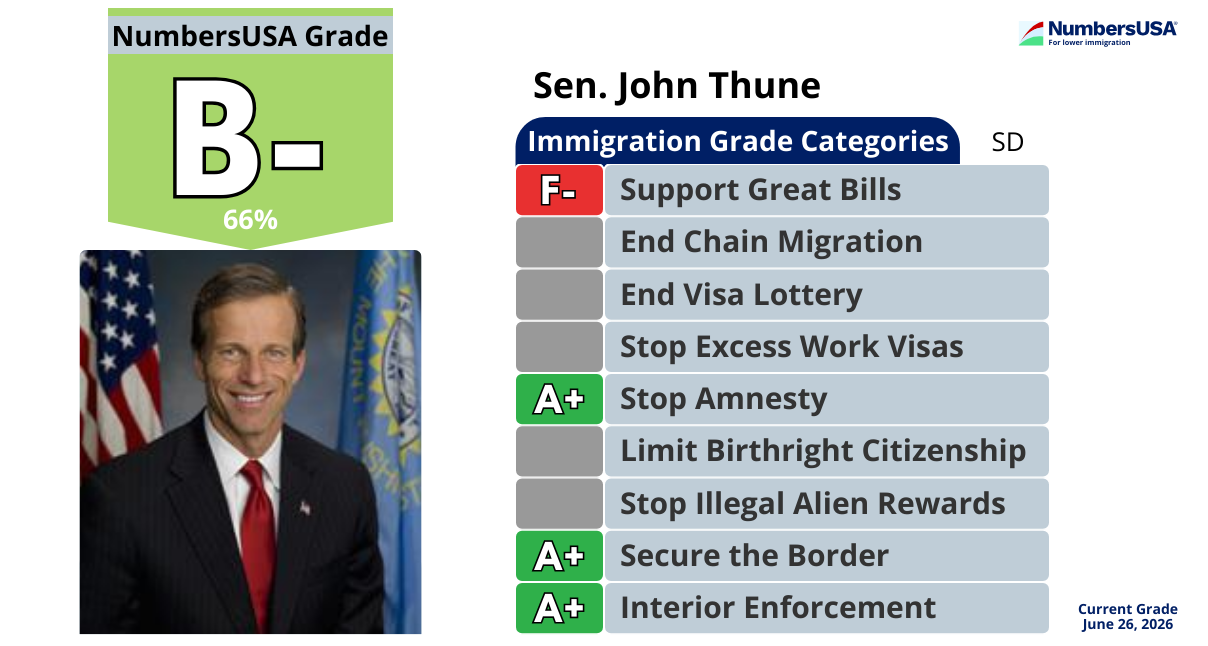
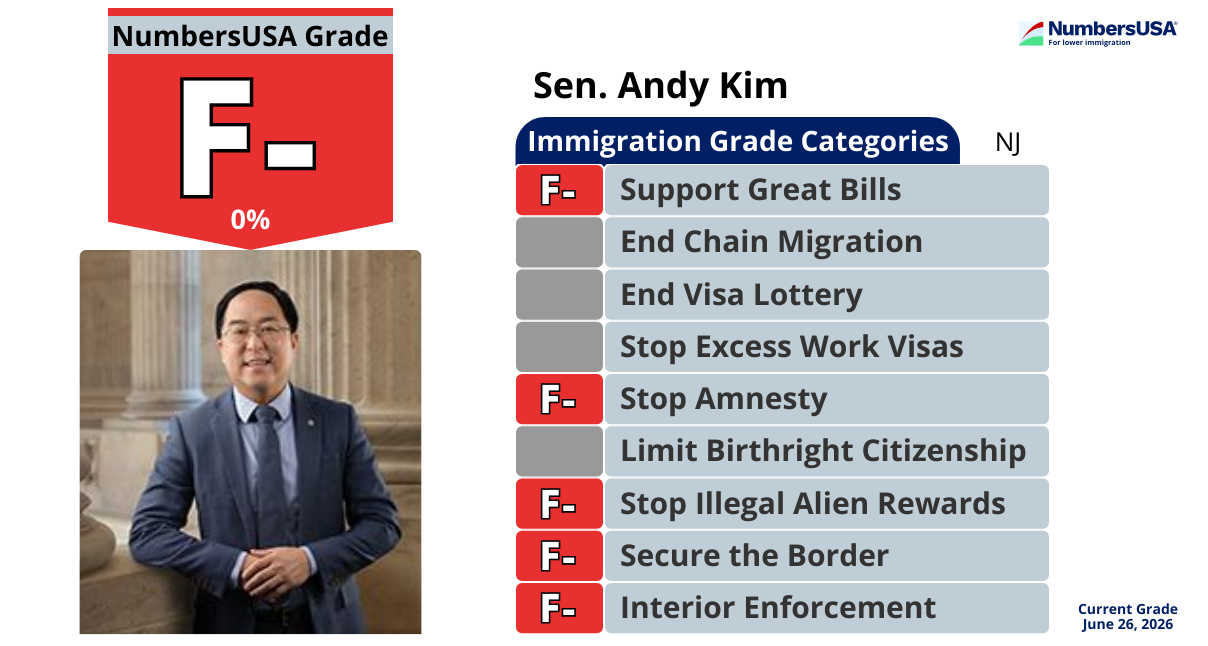
Rep. Glenn Thompson (R-Pa.) introduced the Securing Agriculture’s Workforce Act (H.R. 9535) on June 30 with 49 original cosponsors. Supporters describe it as a practical fix for farm labor shortages. In reality, it is the most consequential expansion of the H-2A foreign agricultural worker program introduced in the 119th Congress – a bill that would permanently transform an already uncapped guest worker program, suppress the wages of American farmworkers, and grant amnesty to the existing illegal agricultural workforce.
The Bottom Line
H.R. 9535 asks Congress to reward illegal hiring, legalize the workforce it produced, suppress the wages against which American farmworkers compete, and hand the Department of Agriculture a blank check to expand the program indefinitely. Agricultural employers already have a legal channel for hiring foreign workers today – an uncapped one. What this bill offers them is a cheaper, larger, permanent workforce with no obligation to American workers at all.
A “Mudsill” Approach
Oren Cass and Daniel Kishi write in Commonplace that Thompson’s bill doubles down on the “mudsill” theory of labor economics that was popular among slave holders:
“The “mudsill theory” rests on three premises: that certain work is beneath the dignity of citizens, that a civilized society nonetheless requires someone to do it, and that the solution is to source a subordinate class whose legal status forecloses the possibility of refusal.“
The bill would drag 19th-century labor practices into the 21st century. Instead of mechanization and innovation, American agriculture would embrace abundant, cheap manual labor.
These workers could become year-round residents and may bring families and children, increasing pressure on social services, health care, and education. And because birthright citizenship remains in place, the long-term fiscal impact would extend beyond the workers themselves, including future educational and public service costs borne by taxpayers.
The bill does three things at once.
A Million Permanent, Year-Round Foreign Workforce, Tied to Agriculture
The H-2A program was designed for temporary, seasonal agricultural work. H.R. 9535 would convert it into a permanent, year-round foreign workforce by eliminating the seasonality requirement and redefining “temporary” as any contract under 350 days – regardless of the actual nature of the job – with renewal of subsequent petitions for the same workers, apparently without the worker ever having to leave the United States. A worker rotating on back-to-back 350-day contracts, renewed without ever going home, is temporary in name only.
The bill would also throw the program open to entire industries that have never had access to it: dairy, meat and poultry slaughter, aquaculture, forestry, equine work, and controlled-environment agriculture. And it would delegate open-ended authority to the Secretary of Agriculture to expand the list of eligible industries without any further vote of Congress.
The H-2A program has no statutory cap. It has already grown from under 100,000 certified positions in 2013 to roughly 400,000 today. Under H.R. 9535, the program would grow to an estimated one million positions within ten years.
Wage Suppression for Farmworkers – Foreign and American Alike
The bill would suppress farmworker wages by allowing the Secretary to dispense with the “adverse effect” wage rate entirely unless finding that the prior year’s employment of H-2A workers adversely affected the wages and working conditions of similarly employed American workers – dropping guest worker pay to the applicable minimum wage, $7.25 an hour under federal law. Where the wage rate is retained, the bill would lower it to the 17th percentile of the state wage distribution for occupations deemed entry level, cap annual adverse effect wage growth at 3.25 percent no matter how fast market wages rise, freeze wages mid-contract, and convert housing that has always been free to workers into a daily wage deduction.
The effect compounds. The gap between what employers would pay under this bill and what they would pay under current wage rules starts at roughly $5 per hour and widens to $9 or $10 per hour within a decade. Over ten years, the bill would transfer an estimated $85 to $100 billion in wages from farmworkers to employers. And because the H-2A wage rate functions as the reference wage for the entire hired farm workforce of roughly 2.4 million, the suppression reaches American agricultural workers far beyond the guest worker program itself.
Amnesty for Illegal Workers
H.R. 9535 would waive the 3- and 10-year unlawful presence bars and related grounds of inadmissibility and deportability for illegal aliens who performed agricultural labor for at least 1,035 hours over the two years before enactment – and, remarkably, for aliens who “voluntarily departed” the country, with no work-history requirement at all. The practical effect is conversion of the existing illegal agricultural workforce – estimated at 680,000 by the Congressional Research Service – into indefinitely renewable H-2A guest worker status.
Supporters point out that the bill contains no pathway to citizenship. That is true, and it makes the arrangement worse, not better. This would be a return to indentured servitude: workers would be bound to the agricultural sector in perpetuity, with continued legal presence conditioned on holding an active work contract with a certified agricultural employer.
Twenty years of compliance would purchase nothing but another 350-day contract. And because legalized workers would be paid at the bill’s suppressed wage rates – as low as the 17th percentile of state wages, or the bare minimum wage if the Secretary dispenses with the wage floor – less the new housing deduction, some could take home less lawfully than they earned unlawfully.
Amnesty for Illegal Employers
Finally, the bill would allow employers to knowingly continue employing illegal aliens who intend to apply for H-2A status without violating the federal prohibition on unlawful employment. Employment records of prior unlawful employment submitted in support of an application could not be used in any prosecution or investigation under immigration or tax law – regardless of whether the application is ever approved – and employers providing those records would receive blanket civil and criminal immunity. The workers, notably, receive no such protection; only the employers who hired them illegally are shielded.
Not Your Members? | Create Account or Log In to manually enter your address.