Facebook
 Post
 Email
 Print
From California’s disappearing open spaces to Arizona’s shrinking water supplies and America’s housing affordability challenges, recent developments underscore the importance of considering federal immigration policy in environmental and economic policy.
Americans are increasingly concerned about housing costs, water availability, and the loss of natural landscapes to development. Although these issues are often treated separately, they share an important underlying factor: population growth.
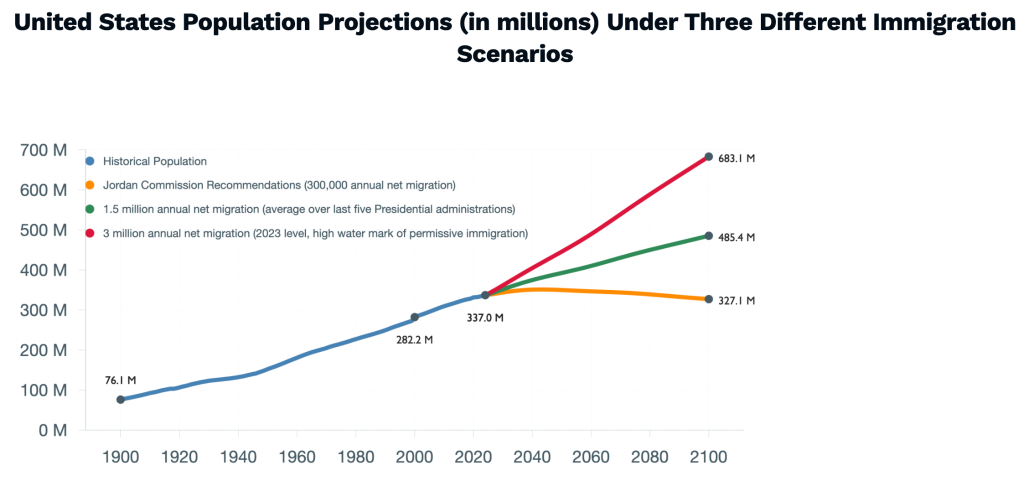
Efforts to accommodate growing populations can strain natural resources and infrastructure. Yet an important question is frequently overlooked: Rather than continually expanding capacity to accommodate more people, shouldn’t policymakers also examine the policies that influence how quickly our population grows?
This newsletter examines California’s development debate, the Colorado River water crisis, evidence that slower immigration is easing rental demand, and NumbersUSA’s participation in a regional sustainability conference.
1. California’s Sprawl Debate: Density, Development, or Slower Growth?
California’s Proposition 45 has renewed debate over how to accommodate development while protecting the environment. But a recent NumbersUSA study suggests that the debate overlooks a third choice: slowing population growth.
California’s Proposition 45 would amend the California Environmental Quality Act (CEQA), establishing deadlines intended to accelerate environmental reviews and legal challenges for certain projects, including housing, transportation, and water infrastructure. Supporters argue that streamlining approvals would help address housing shortages and high costs. Opponents worry that weakening environmental review could increase development pressures on farmland, wildlife habitat, and other natural resources.
Underlying this debate is a familiar paradigm: California must continue accommodating population growth, and the principal question is how.
One approach emphasizes higher-density housing within existing urban areas. Another allows more outward development, potentially increasing the conversion of farmland and natural habitat.
But a recently released NumbersUSA study, Paving Paradise: 50 Years of Population Growth in California, identifies a third possibility: reducing the population-growth pressures that create demand for additional development.
The study examined land-use changes between 1982 and 2022, finding that California converted approximately 3,741 square miles of farmland and natural habitat into developed land—an area larger than Delaware and Rhode Island combined.
More importantly, the researchers attributed 91% of this land conversion to population growth, compared with just 9% attributable to increased land consumption per person.
This finding challenges the assumption that higher-density development alone can prevent the continued loss of open space. While more compact development can reduce land consumption per resident, California’s experience demonstrates how population growth can overwhelm these land-saving approaches.
The study also included a survey of more than 1,000 likely California voters. Ninety-three percent considered protecting remaining open spaces important, while 57% preferred California’s population to remain stable or become smaller. Only 11% favored a return to rapid population growth, with preferences for limiting growth extending across party lines.
California’s experience suggests that communities should not be limited to choosing between greater density and outward expansion. Slower population growth offers another means of reducing development pressures while preserving farmland, wildlife habitat, and open space.
Federal immigration policy, a major influence on long-term national population growth, must be included in that discussion.
2. Arizona’s Water Crisis: Dividing a Shrinking Supply While Demand Keeps Growing
As Arizona and Nevada challenge federal Colorado River water policies, an important question receives seemingly little attention: How will the Southwest accommodate additional population growth when existing water supplies are already inadequate?
Water availability has become a major concern in Arizona, where decades of rapid population growth have coincided with mounting pressure on the Colorado River and groundwater reserves.
The state’s population has more than tripled over 50 years, reaching more than 7.6 million residents. Metropolitan areas such as Phoenix and Tucson have expanded across formerly undeveloped landscapes, increasing demands for housing, infrastructure, and municipal water supplies (see our study).
Meanwhile, the Colorado River, which supplies water to approximately 40 million people across seven states and Mexico, has experienced prolonged drought and declining reservoir levels.
The conflict over its remaining water intensified this month.
On October 16, Arizona announced that it was joining Nevada’s lawsuit challenging the U.S. Department of the Interior’s Colorado River operating plan.
Under a proposed two-year Lower Basin agreement, beginning January 1, 2027, annual deliveries would be reduced by approximately 1.25 million acre-feet. Arizona would absorb 760,000 acre-feet of those reductions—27% of its full Colorado River allocation. California would lose 440,000 acre-feet (10%) and Nevada 50,000 acre-feet (17%).
The states are seeking to preserve this negotiated arrangement while challenging federal decisions that could impose substantially deeper reductions. Under severe conditions, Nevada could lose as much as 71% of its allocation.
Arizona and Nevada contend that federal policy unfairly concentrates mandatory reductions on the Lower Basin while failing to impose comparable obligations on the Upper Basin states.
Their immediate concern is understandable. Existing farms, businesses, and communities depend on these water deliveries. Nevada’s Las Vegas metropolitan area obtains approximately 90% of its water from the Colorado River, while Arizona’s Central Arizona Project serves major population centers and agricultural users.
But the dispute raises a broader sustainability question.
If the Colorado River cannot adequately provide the water already allocated to existing users, how can the region continue accommodating even more population growth?
As surface-water supplies become less dependable, some communities may turn increasingly to groundwater. Yet groundwater reserves are not unlimited. Pumping groundwater faster than it is replenished can lower water tables, increase pumping costs, and diminish the reserves available during prolonged droughts.
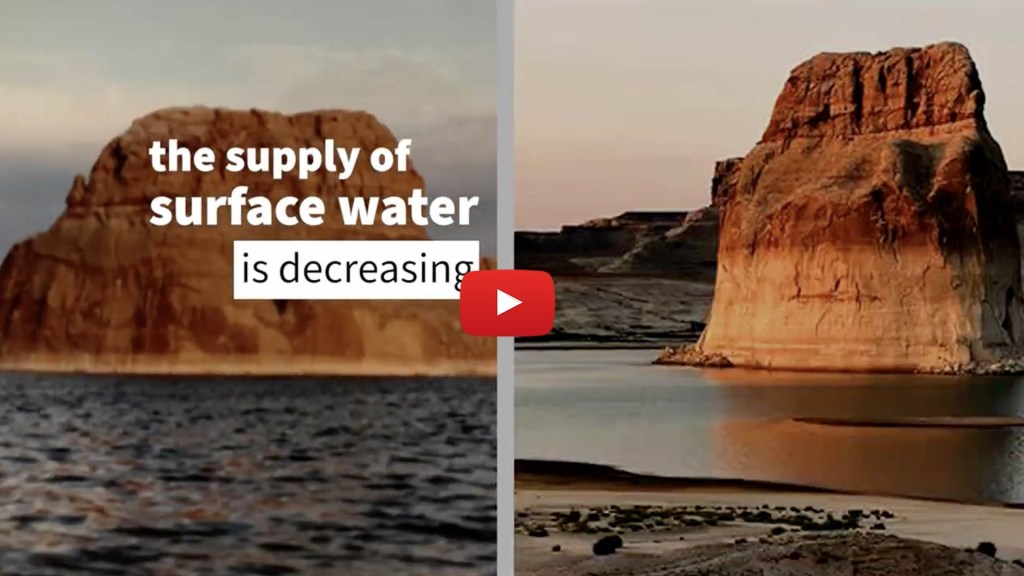
Conservation measures can stretch existing supplies, but they cannot guarantee that water availability will keep pace with continued population growth.
Domestic migration has played a major role in Arizona’s and Nevada’s growth. Nevertheless, federal immigration policy influences national population growth and the long-term demand placed on the country’s limited resources.
The Colorado River dispute illustrates the difficulty of managing a finite resource while continually planning for additional users.
Protecting existing water supplies is essential. Limiting the growth of future demand needs to receive equal consideration from the federal government.
3. Housing Affordability: Slower Immigration Brings Relief to Rental Markets
As housing affordability becomes a prominent national concern, new research suggests that reduced immigration is helping ease rental demand—offering another approach to addressing housing shortages without continually building more homes and apartments.
For years, Americans have been told that the solution to high housing costs is to build more homes and apartments. Increasing supply can help, but this approach often overlooks the other side of the equation: demand.
Every additional household needs somewhere to live. When population growth persistently increases housing demand, communities must continually expand their housing stock simply to keep pace.
Recent developments suggest that slower immigration can help relieve some of that pressure.
According to Harvard University’s Joint Center for Housing Studies, restricted immigration contributed to a substantial slowdown in rental demand during 2025, alongside economic uncertainty and a weakening labor market.
Annual growth in U.S. households occupying professionally managed apartments fell from 784,000 in the second quarter to 366,000 by the fourth quarter.
As demand weakened and newly constructed apartments entered the market, asking rents declined 0.6% nationally during the fourth quarter compared with a year earlier.
Some metropolitan areas experienced larger reductions. In Denver, rents fell nearly 5% over the year.
In Los Angeles, median metropolitan rents fell to $2,167 in December 2025, approximately 4% below their August 2022 peak and their lowest level in four years. The Los Angeles Times reported that increased apartment construction and declining demand contributed to higher vacancy rates and greater bargaining power for renters.
One property manager reported increased vacancies in East Los Angeles and Long Beach following immigration enforcement activity. Although this observation does not establish the precise contribution of enforcement to declining rents, it illustrates how changes in population and household demand can affect local rental markets.
Harvard’s findings reinforce an important economic principle: Slower growth in housing demand reduces upward pressure on rents.
This has environmental implications as well.
Communities facing persistent population growth must continually expand housing, roads, utilities, and other infrastructure to accommodate additional residents. Where development expands outward onto farmland and wildlife habitat, those lands are permanently converted to developed uses.
Improving affordability need not depend exclusively on building more housing. Reducing the growth of demand can also help, while reducing the environmental costs associated with continued development.
4. NumbersUSA Brings Population Growth into the Environmental Sustainability Discussion at UCSB
At a recent University of California, Santa Barbara sustainability conference, NumbersUSA researchers highlighted the relationship between population growth, urban sprawl, and the loss of California’s farmland and natural habitat.
On October 14, environmental professionals, government officials, academics, and community organizations gathered at UC Santa Barbara for the 2026 Central Coast Sustainability Summit.
The conference brought together participants from throughout California’s Central Coast to discuss environmental challenges, share successful approaches, and identify opportunities for collaboration.
Sessions addressed renewable energy, clean transportation, climate action, conservation, and other sustainability initiatives.
Among the conference’s presentations was a panel titled Drivers of Urban Sprawl on California’s Central Coast, 1982–2022, and How Local Communities Are Handling It.
The panel featured Leon Kolankiewicz, Scientific Director of the NumbersUSA Education and Research Foundation; Philip Cafaro, retired Colorado State University professor of environmental ethics; and Linda Parks, Executive Director of Save Open-space and Agricultural Resources (SOAR) in Ventura County.
Kolankiewicz and Cafaro are also the authors of NumbersUSA’s recently released Paving Paradise study.
Their presentation examined four decades of development along California’s Central Coast, where developed land increased from approximately 291,600 acres in 1982 to 442,900 acres in 2022.
That represents a 52% increase in developed land, or approximately 151,300 acres of additional development.
The panel connected these changes to the broader environmental consequences of population growth while highlighting SOAR’s efforts to protect farmland and open space in Ventura County.
 Linda Parks, Leon Kolankiewicz, and Phil Cafaro (left to right) discuss population growth and environmental sustainability at this October’s UCSB conference.
NumbersUSA’s participation was particularly significant because environmental sustainability discussions often concentrate on managing the consequences of development through better planning, cleaner technologies, and resource conservation.
These mitigation efforts are important. But they do not address the population-growth pressures that increase demand for land, water, energy, and infrastructure.
By presenting research on the relationship between population growth and sprawl, NumbersUSA introduced an additional consideration into discussions about environmental sustainability: the importance of addressing the underlying drivers of environmental impacts, not merely mitigating their consequences.
The conference also demonstrated the value of connecting population research with the practical experience of local conservation organizations. Protecting farmland and open space through local land-use policies remains important, but these efforts alone cannot eliminate the development pressures associated with continued population growth.
Ultimately, California cannot expect to achieve lasting environmental sustainability through mitigation measures alone. It must also confront the population-growth pressures that continually increase demands on its limited land and natural resources. Federal immigration policy must be part of that discussion.
Not Your Members? | Create Account or Log In to manually enter your address.