Birthplace of Pres. Hayes – Mass immigration forced him to end federal Freedman protections

 Published by
Roy Beck
 Facebook
 Post
 Email
 Print
ROY ON THE ROAD in DELAWARE, OHIO
My BACK OF THE HIRING LINE book tour took me to the birth town of Pres. Rutherford B. Hayes (1877-81) who exemplifies the nuances and cruelty of history.
After Hayes’ death, the Boston Globe reported that famous Black activist W.E.B. Dubois honored him for his “tireless energy and single-heartedness for the interests of my race.”
Yet, Hayes’ presidency may be best known – and reviled – for ending most federal military protections for Black civil rights in the former Confederacy. Those rights would not again obtain substantial federal protections until the 1960s.
Unrestricted immigration policies explain much of the seeming contradiction.
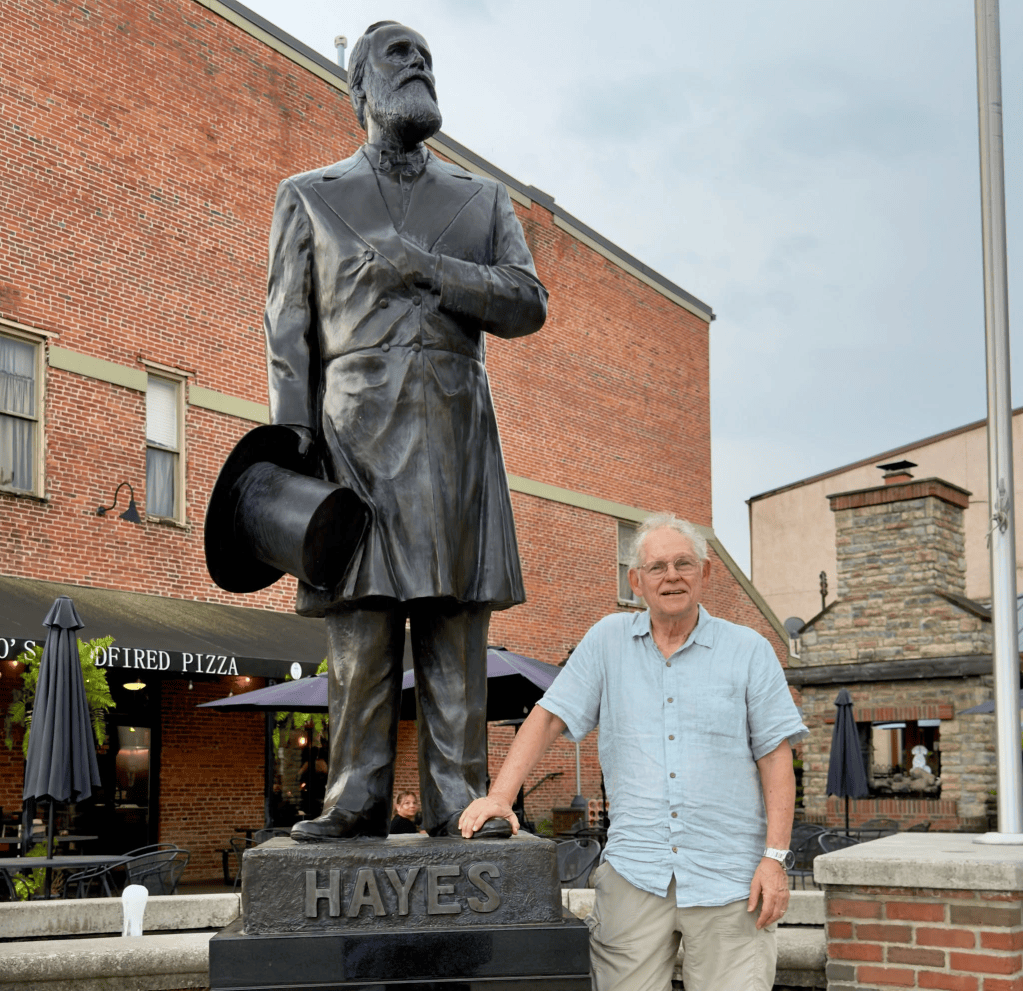
NumbersUSA FOUNDER ROY BECK WITH STATUE REFLECTING HOMETOWN’S RENEWED RESPECT FOR NATIVE SON. ERECTED IN 2019 AT A PROMINENT DOWNTOWN CORNER, A BLOCK FROM HAYES BIRTH.
Before the Civil War, Hayes was an outspoken abolitionist lawyer who defended runaway slaves in court. After the war, he fought as a congressman and Ohio governor for Black civil rights and improved education.
The 1876 Republican convention down in Cincinnati nominated Hayes — a five times-wounded Union general in the Civil War — to succeed fellow Ohioan Ulysses Grant. My book includes the dramatic appeal by Black abolitionist superstar Frederick Douglass on the first day of the convention as he pled with delegates to continue Grant’s military protection of Black rights.
The convention agreed, and Hayes ran on that plank of the Party platform. As my book [order directly on Amazon] states:
Unfortunately for Douglass, his chance of ultimate success had already been foreclosed by the huge demographic shift in the northern electorate caused by immigration.
An explosive level of immigration into the North during that period had provided a huge boost of new voters who overwhelmingly joined Parties which strongly opposed the Republicans’ aggressive post-war efforts for Black rights. I explain how labor competition was at the heart of all that.
When the November results came in, Republicans lost nine of the former pro-emancipation Union states, including New York, Connecticut, New Jersey, and Indiana. All had switched to the anti-Reconstruction Democratic Party.
Buoyed by decades of immigrant additions to northern voting rolls, Democrats won the majority of the national popular vote for the first time since 1852. But after one of the most dramatic election-result controversies in U.S. history and controversial back-room negotiations, Republican candidate Rutherford B. Hayes was declared the victor by one Electoral College vote. The price was withdrawal of the federal troops from enforcing the post-Civil War Constitutional Amendments.
After that wake-up call to the changing balance of power fueled by mass immigration, the Republican Party virtually conceded the Democrats’ nullification of the Constitutional Amendments for decades.
As President, Hayes vetoed congressional attempts to repeal remaining federal laws that were still succeeding in protecting some Black voting rights. But that could not stop the deterioration of living conditions for the 90% of Black Americans economically trapped in the former Confederacy.
Hayes’ post-White House life had the appearance of penance. He worked for Black education and civil rights in the South through philanthropic organizations. He was president of the Slater Fund which contributed toward industrial and graduate education for Black students. That included direct grants to a young W.E.B. Dubois and primary financial assistance to Booker T. Washington’s Tuskegee Institute in Alabama. Those two men became the nation’s most influential Black leaders after the death of Frederick Douglass (whom Pres. Hayes had appointed as Marshall of the District of Columbia).
But for all of Hayes’ personal support for emancipated slaves, the political, labor market, and demographic changes wrought by mass immigration severely limited his ability to stop regression of economic and civil rights for Freedmen for another three decades until annual arrivals of foreign workers were finally moderated.
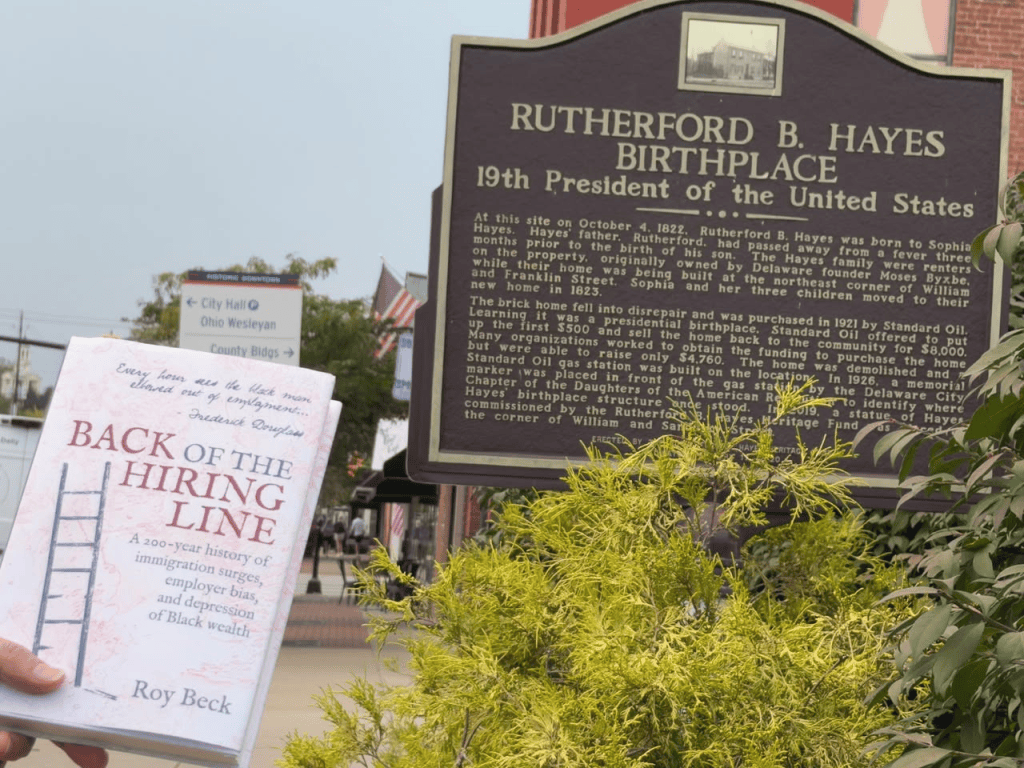
ONLY THIS PLAQUE AND A GAS STATION STAND ON THE SITE OF HAYES’ BIRTH HOUSE. IN 1921, STANDARD OIL CO. PURCHASED THIS DOWNTOWN PLOT BUT OFFERED TO SELL IT TO THE COMMUNITY IF IT DESIRED TO PRESERVE THE HISTORIC HOUSE. WHEN THE $8,000 STILL HAD NOT BEEN RAISED IN 1926, THE CORPORATION DEMOLISHED THE HOUSE AND REPLACED IT WITH A GAS STATION .
VISIT: This little city of around 40,000 is just 30 miles north of Columbus. Shirley and I enjoyed an evening in the delightfully alive Delaware downtown of restaurants and shops, surely bolstered by the presence of a college and seminary in the city. (And no accessibility issues.)
Shirley and I previously toured Hayes’ wonderful northwest Ohio home in Fremont which contains the presidential library and museum, providing insight into a fascinating life.
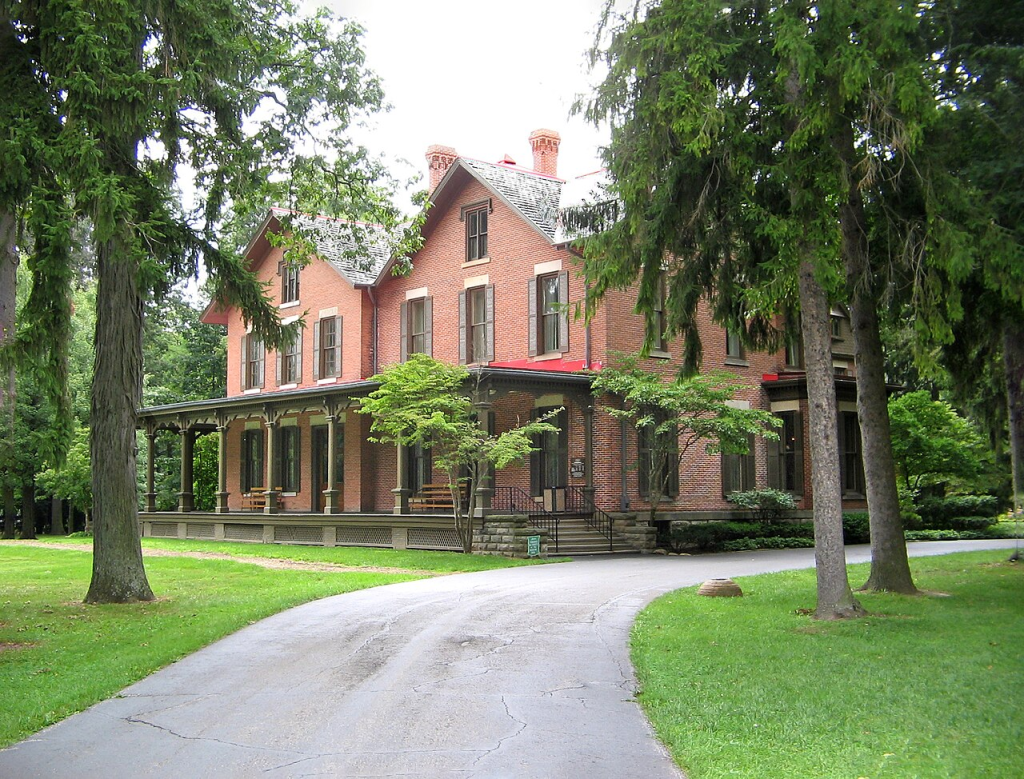
HAYES KEPT ADDING TO HIS FREEMONT HOME UNTIL IT HAD MORE THAN 30 ROOMS AND 10,000 SQUARE FEET, LENDING IT PERFECT FOR THE PRESIDENTIAL LIBRARY AND MUSEUM AFTER HIS DEATH.
#########
Not Your Members? | Create Account or Log In to manually enter your address.