Facebook
 Post
 Email
 Print
NumbersUSA Founder Roy Beck, author of “Back of the Hiring Line”, has been on the road visiting landmarks related to Presidents and the history in his books. This is Part 1 of a series about those landmarks and how they relate to our country’s Hiring Line history.
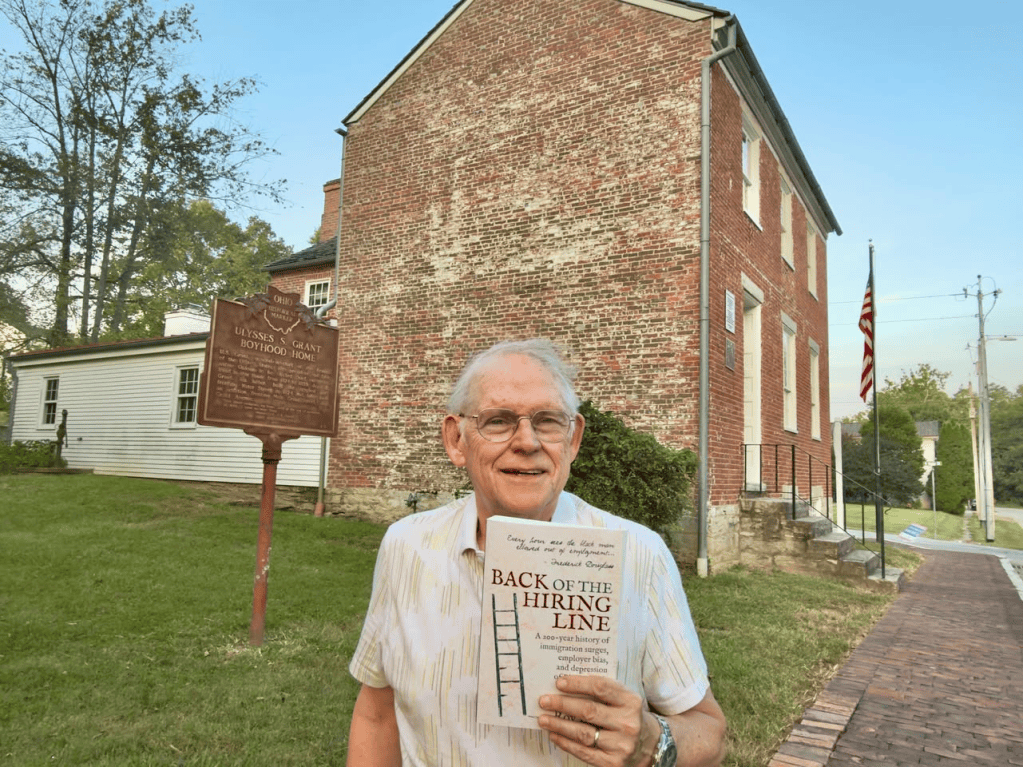
HOME OF ULYSSES GRANT (PRESIDENT, 1869-77) WAS TEEMING WITH ASSERTIVE ABOLITIONISM
GEORGETOWN, OHIO – I’m taking my just-released book on a tour of historic sites of Ohio’s 8 Presidents.
All played roles in the book’s long-neglected and mostly forgotten history of why the Civil War Emancipations failed to liberate around 90% of Black Freedmen and their descendants from economic bondage for another half-century.
Nobody was more aggrieved by this result than Ulysses Grant who had spent his childhood in this house in an obscure little town near the Ohio River. It was a home teeming with assertive abolitionism, although that didn’t bloom in full flower in the “son” until part way through Grant’s leadership in the war.
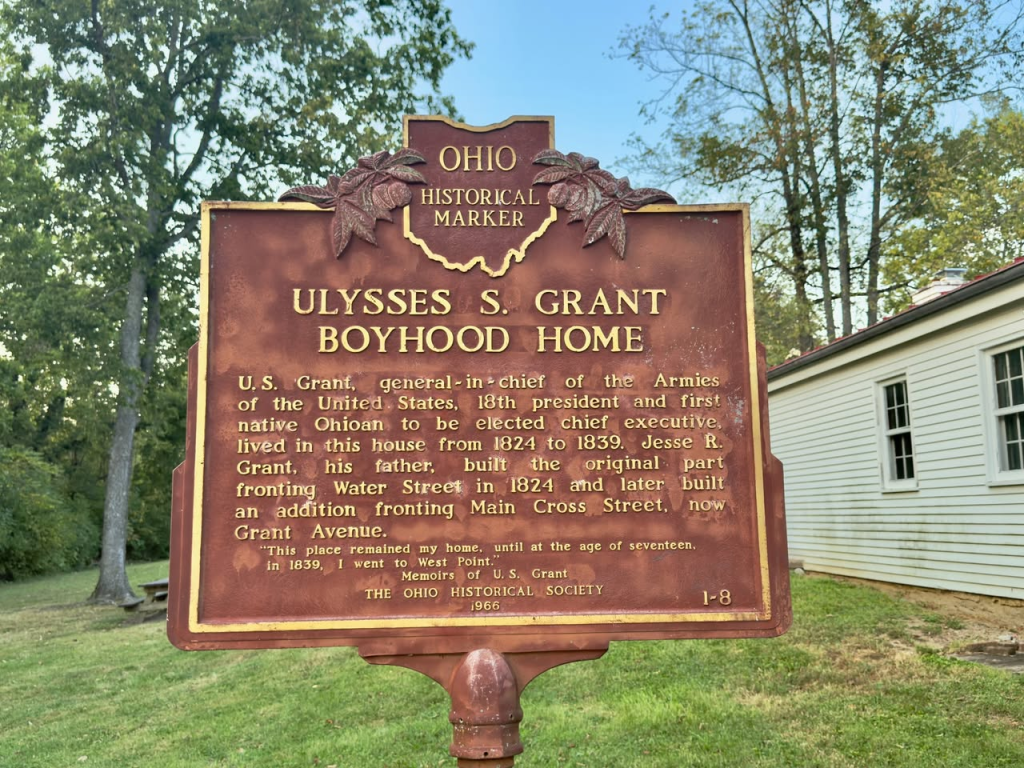
HISTORICAL MARKER OF GRANT’S BOYHOOD HOME, IMAGE BY ROY BECK
After eight years as President in valiantly trying to enforce the new Civil Rights Amendments of the 1860s, Grant never fully understood one of the primary reasons for his and the nation’s failure: mass arrivals of foreign workers in the industries of the North.
A major expansion of this history in my book’s Second Edition [www.backofthehiringline.com] provides a fresh view by pulling together the much-later research of economic historians and the contemporaneous writings of the nation’s Black publishers and orators. Chapter 3 offers this insight:
“The Republican Party helped to further its own demise in northern cities, according to W.E.B Du Bois in his book on Reconstruction. Its 1864 Platform ‘encouraged’ a “liberal” immigration policy for the “oppressed of all nations.”
Republicans backed homestead and other laws that created an eventual “new flood of cheap immigrant labor [that] was brought into the country to work on the railroads and in the new industries.”
Immigrants were diluting the influence of Black voters at the ballot box nationwide and eventually even replacing them in the North as their difficulty in those labor markets forced many back south. Fearing having to compete for jobs with fully free former slaves, most immigrants joined the anti-emancipation Democratic Party, increasing its ability to block Reconstruction and federal enforcement of the Civil Rights Amendments.
President Grant lost much of his ability to continue his long crusade to enforce Black voting rights when Democrats won control of the U.S. House of Representatives in the 1874 midterm elections.” (p. 53)
If you find this history interesting, please share this article. (My wife Shirley is once again my official photographer on this promotional tour.)
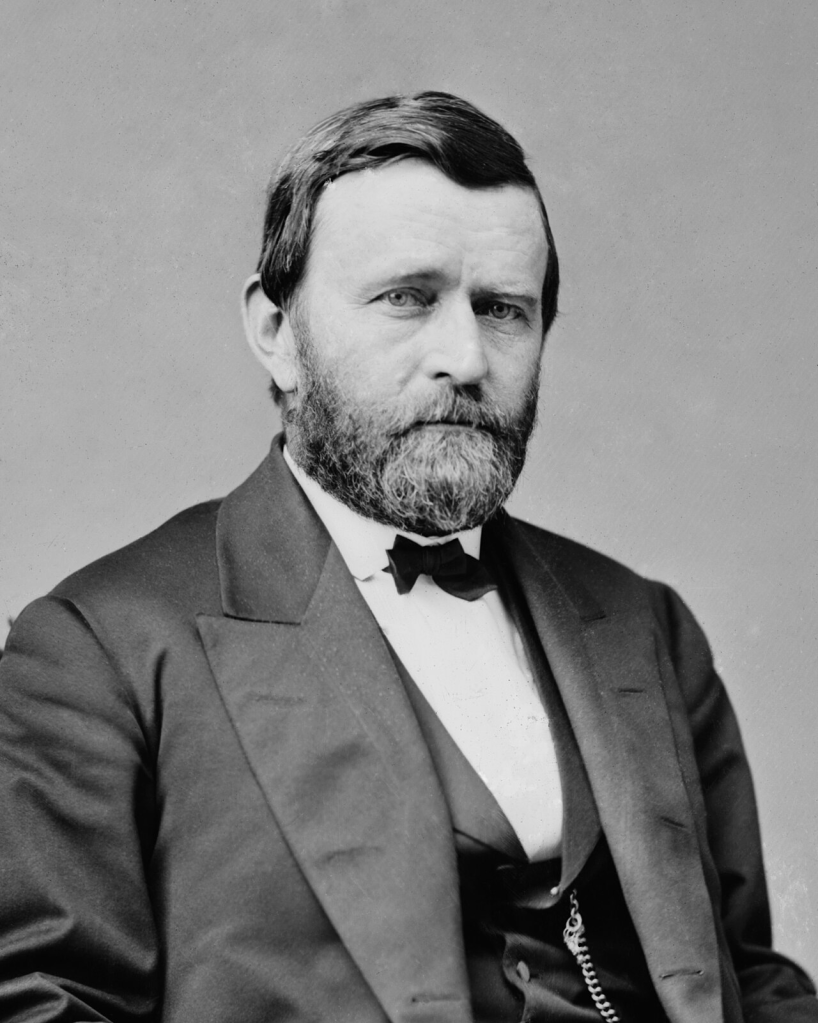
IMAGE BY MATTHEW BENJAMIN BRADY – LIBRARY OF CONGRESS, PUBLIC DOMAIN
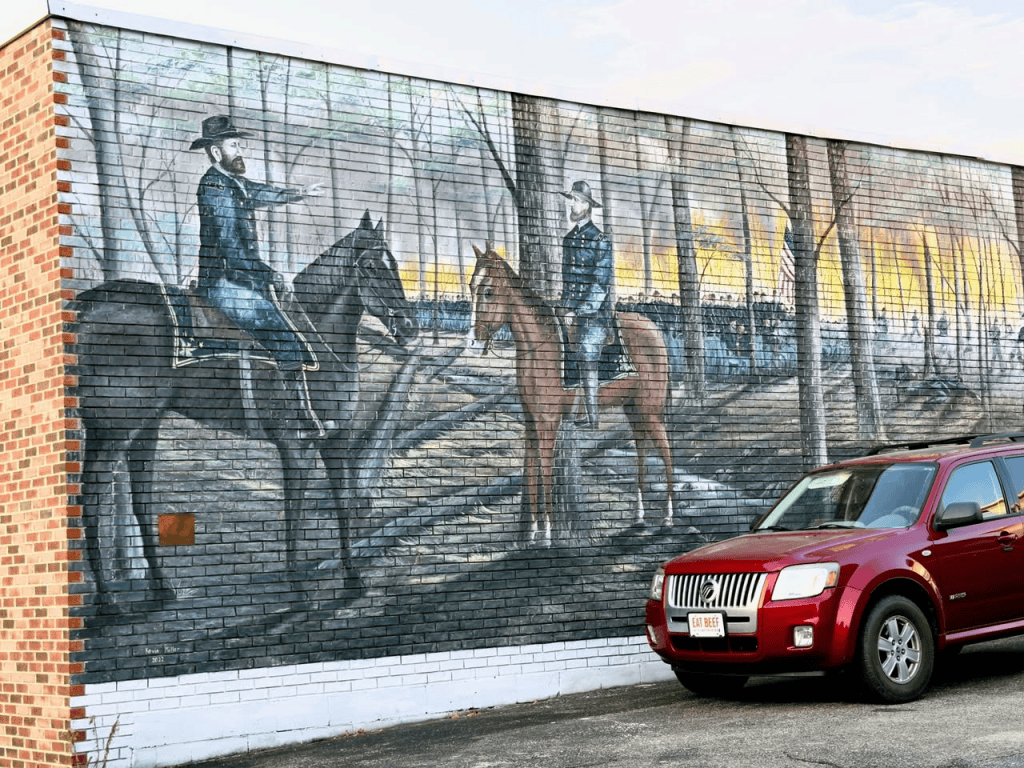
Murals on some of the buildings in little Georgetown (current population 4,440) make sure residents don’t lose sight of what a pivotal role its most famous resident played in the life of the nation.
# # # #
Not Your Members? | Create Account or Log In to manually enter your address.