Facebook
 Post
Post
 Email
Email
 Print
Print
How immigration-driven population growth increases demands on America’s finite water resources
Immigration policy affects more than the number of people entering the United States. Because immigration has been a major component of recent U.S. population growth, it also affects long-term demand for housing, infrastructure, energy—and water. Conservation can stretch existing supplies, but the natural water supply does not increase.
According to the Census Bureau, the nation added about 1.8 million people between July 2024 and July 2025. Net international migration accounted for about 1.3 million of that increase—roughly 72 percent—while births exceeded deaths by about 519,000. Immigration levels can change substantially from year to year, but international migration has been a major component of recent U.S. population growth.
That demographic connection matters to water supplies. Population growth increases demand from households, businesses, industry, energy production and agriculture. Conservation and efficient water use can accommodate some growth, but additional population still adds demand that would not otherwise exist.
Immigration-driven population growth can push constrained supplies closer to their limits, reducing the margin available to withstand drought and other disruptions, and/or exacerbate existing shortages.
Accommodating additional demand can also require tradeoffs. Even where sufficient water can be provided, doing so may require costly infrastructure, greater conservation, alternative supplies, or environmentally consequential projects such as dams and water diversions. Expanding water supplies to accommodate immigration-driven population growth can carry economic and environmental costs.
Part 1: Surface Waters — Living Within the Supply
Rivers, lakes, and reservoirs provide drinking water to much of the American population. Reservoirs can store water from wet periods for use during dry ones, but they cannot create water. Their supply ultimately depends upon precipitation, snowmelt, runoff, and withdrawals.
As population grows, so does demand upon these finite supplies. When immigration contributes to population growth, it also contributes to the additional demand.
Conservation Can Only Go So Far
Population growth does not necessarily produce a proportional increase in water consumption. Conservation can reduce per-capita demand and help accommodate growth. But additional population still adds demand, and there is a limit to how much efficiency can offset continued growth.
The distinction is important. Conservation addresses how much water each person uses. Immigration policy affects how many additional people are adding to future water demand.
The Colorado River: Exacerbating an Existing Problem
The Colorado River illustrates how additional demand can interact with an already stressed water system. It provides water to more than 40 million people in seven states while also supporting agriculture, tribes, industry, and ecosystems. In April 2026, after more than two decades of drought, system storage stood at only about 36 percent of capacity.
Immigration did not cause the Colorado River’s long-term drought, low runoff, or other water-management challenges. Agriculture also accounts for most consumptive use in the basin. But growing demand has added pressure to an already stressed water system, reducing the margin available to withstand drought and other disruptions.
Developing additional supplies can also be extremely costly. Seawater desalination can carry substantial economic costs, while new dams and water diversions can carry substantial environmental costs. The consequences of growth can occur before the taps actually run dry.
Water Restrictions and Resilience
The same principle applies outside the arid West. Even comparatively water-rich regions such as New England periodically impose outdoor watering restrictions when drought reduces streamflow, reservoir storage, or groundwater levels.
Population growth can reduce the reserve capacity that helps communities withstand drought, infrastructure failures, and other emergencies. A system that comfortably meets normal demand may become increasingly vulnerable as demand approaches its dependable supply.
Development also produces more stormwater and wastewater requiring treatment. Yet while contaminated surface water can often be treated, an inadequate water supply can be far more difficult and costly to overcome.
The long-term challenge is not merely providing enough water during an average year. It is maintaining enough surplus capacity to withstand the bad years as well.
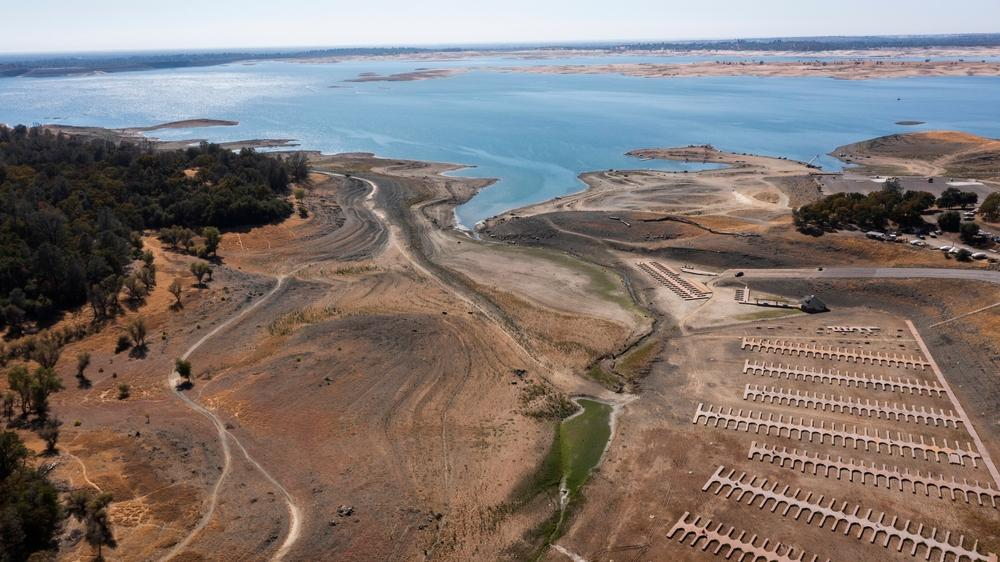
Drought and declining water levels expose the shoreline and leave a marina high and dry at Folsom Lake, California, an important municipal water-supply reservoir.
Part 2: Groundwater — Drawing Down the Reserve
Groundwater depletion occurs largely out of sight. Some aquifers recharge relatively quickly; others recharge so slowly that pumping can deplete water accumulated over hundreds or thousands of years.
When Pumping Exceeds Recharge
When pumping persistently exceeds recharge, groundwater levels decline. Wells must be drilled deeper, pumping costs increase, shallow wells may fail, and compaction can permanently reduce water-storage capacity.
An aquifer need not become dry to reach a practical limit. Wells may no longer produce enough water, or pumping may become uneconomical.
The Ogallala: Depleting a Critical Reserve
The Ogallala Aquifer beneath the Great Plains provides a dramatic example of groundwater depletion. In Texas, approximately 95 percent of groundwater pumping supports irrigated agriculture. The Texas Water Development Board reports that withdrawals exceed recharge throughout much of the aquifer and that water levels have declined by more than 300 feet in some locations during the past 50 to 60 years.
Once an aquifer can no longer support high-capacity wells—or pumping becomes prohibitively expensive—the usable supply can effectively be exhausted for water-intensive activities such as irrigated agriculture.
The Ogallala demonstrates why water supply problems cannot simply be attributed to immigration or population growth. Agriculture dominates water use in much of this region. But where withdrawals already approach or exceed replenishment, additional demand makes balancing supply and consumption more difficult.
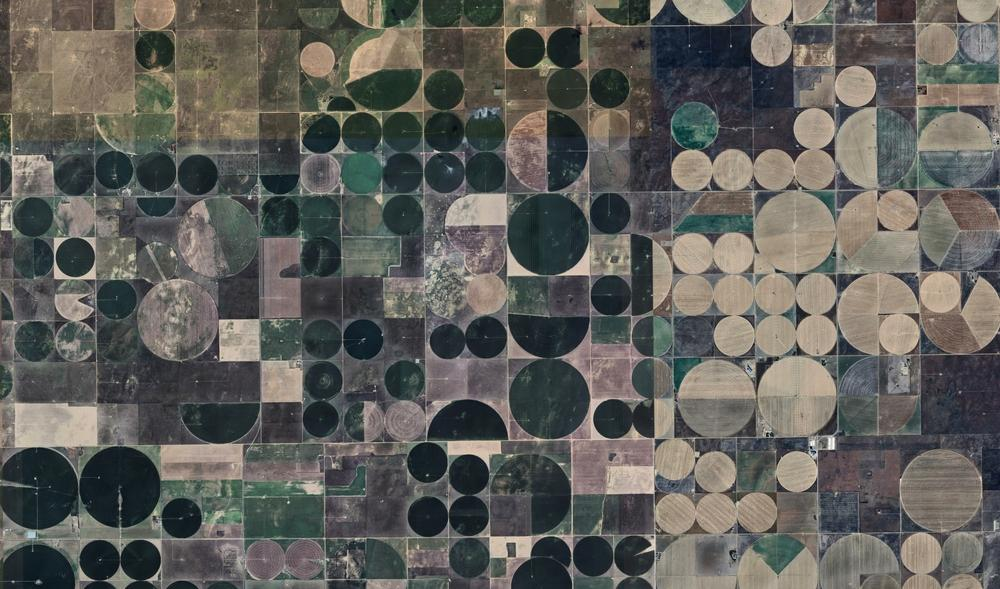
Center-pivot irrigation across Kansas farmland, where decades of agricultural pumping have depleted portions of the Ogallala Aquifer.
When Water Limits Development
Arizona provides a striking example of water constraining growth. State modeling of the Lower Hassayampa Sub-basin west of Phoenix projected 4.4 million acre-feet of unmet groundwater demand over 100 years. The Arizona Department of Water Resources consequently said it could not approve proposed subdivisions relying on groundwater unless another qualifying supply could be demonstrated.
Groundwater limitations are not confined to the arid Southwest. Communities in humid New Hampshire periodically restrict outdoor water use when wells and aquifers become stressed during drought and heavy summer demand. Abundant rainfall, rivers, and lakes do not necessarily mean sufficient potable groundwater is available everywhere.
Development can also introduce road salt, septic-system nitrogen, fertilizers and pesticides into groundwater, while heavy coastal pumping can contribute to saltwater intrusion. Such contamination can persist for decades and be difficult and expensive to remediate.
Yet water quantity remains the more fundamental constraint. Treatment can sometimes make polluted water usable again. Treatment cannot replace groundwater that has been withdrawn faster than nature replenishes it.
Whether a community depends on an aquifer, river or reservoir, the basic principle is the same: water supplies are finite. Immigration-driven population growth creates additional water demand, reducing water-supply resilience and potentially requiring costly measures to accommodate that demand. Long-term water security therefore depends not only on conserving and protecting water resources, but also on limiting the growth of demand placed upon them.
Not Your Members? | Create Account or Log In to manually enter your address.