Facebook
 Post
Post
 Email
Email
 Print
Print
If we don’t know where we came from, we get lost on our way home. This week marked several anniversaries that show us both the path toward a better immigration policy and some paths we need to avoid.
But first…
The House of Representatives will be in session for 3 days next week. The Senate and House will both return to Washington mid-September for their last three weeks in session before the November midterms.
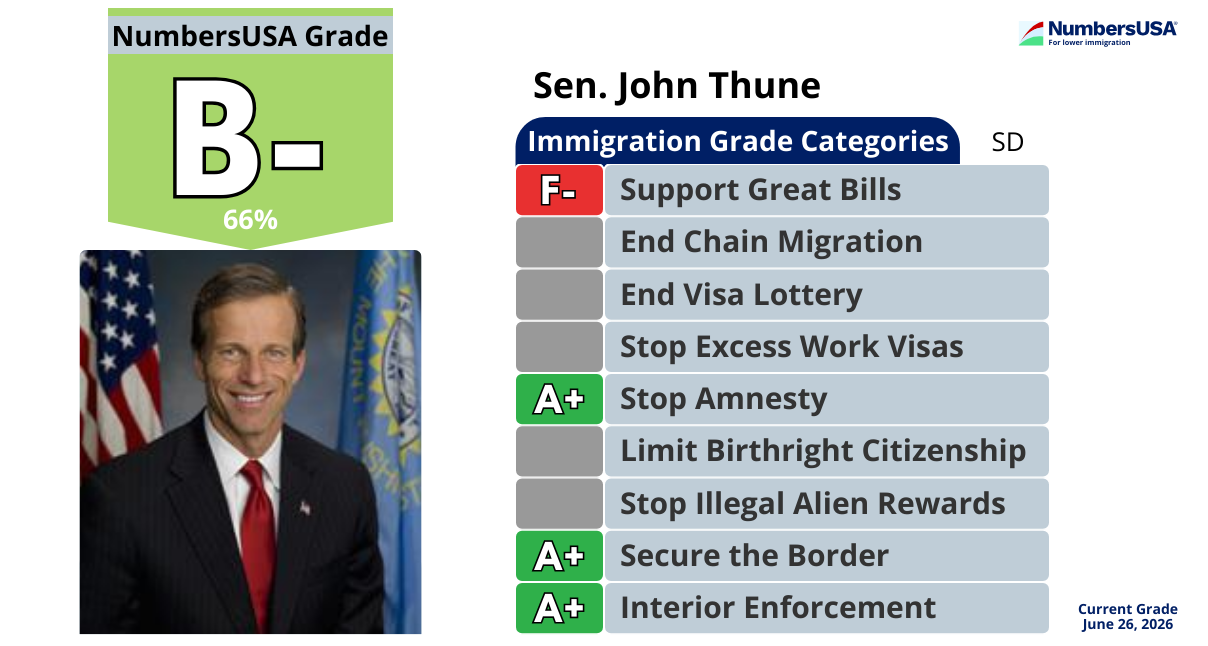
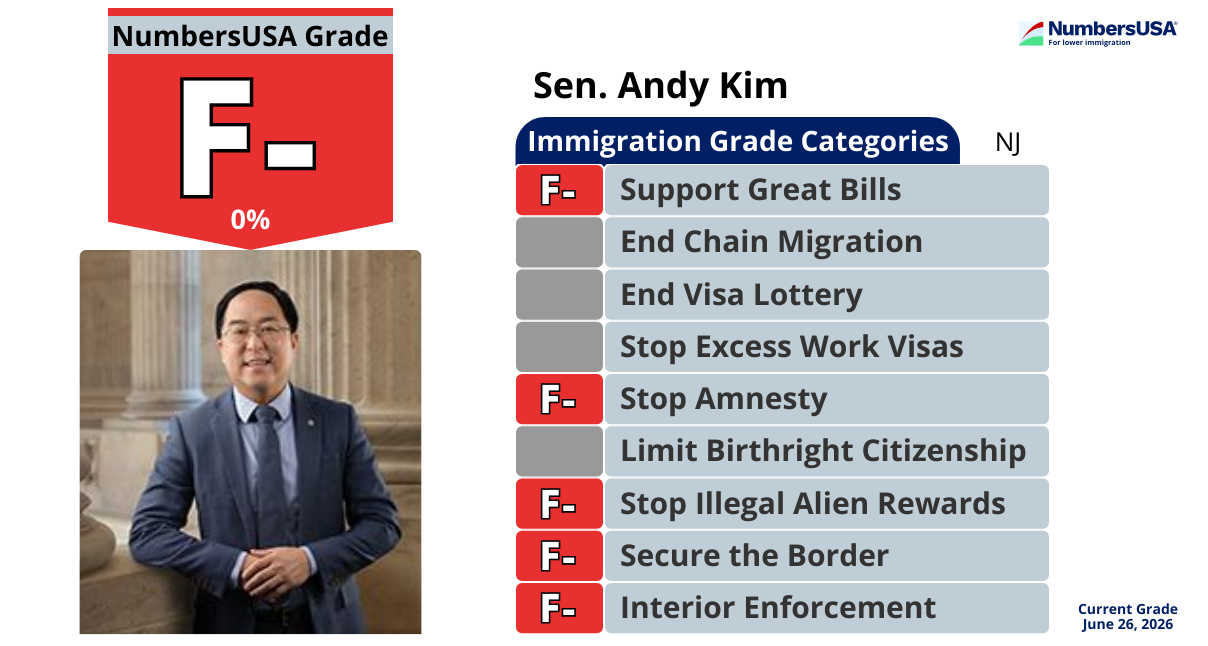
Here’s their current report card:
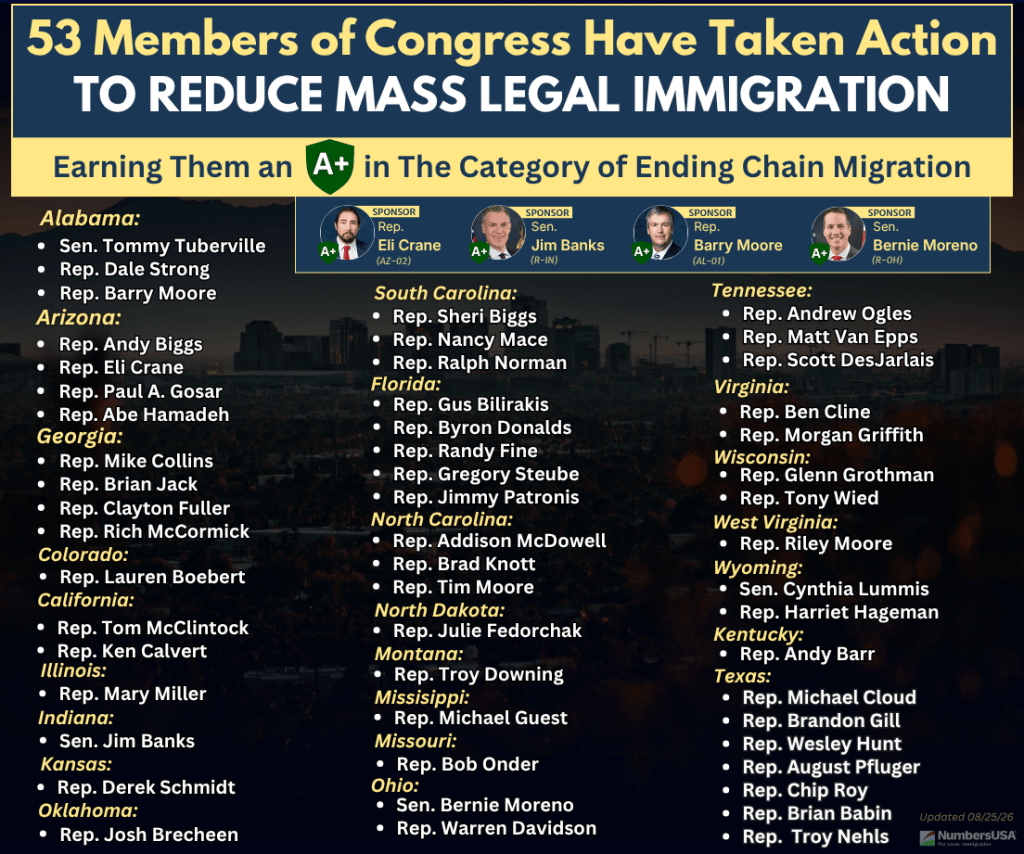
53 Members have an A+ for acting to end Chain Migration, the primary driver of mass legal immigration.
79 have an F for taking action to accelerate Chain Migration.
401 have taken no action, effectively leaving the mass immigration status quo in place.
Share Grades (and other actions)
This Week In Immigration History
Tight immigration policies helped create a middle class nation and secure equal rights. Mass immigration returned Americans to the back of the hiring lines.
Aug. 25, 1925 — A. Philip Randolph organizes the Brotherhood of Sleeping Car Porters, the first major Black labor union.
Like Booker T. Washington before him, Randolph believed the path to social equality started with economic fairness. He was a key supporter of the immigration reductions passed in 1924. After the immigration restrictions went into place, he leveraged the tight labor market to establish the first Black labor union in the United States.
Aug. 25, 1937 — Exactly 12 years to the day after the union’s founding, the Brotherhood of Sleeping Car Porters signs a contract with the powerful Pullman Company, known for inventing the luxurious sleeping car for overnight rail travel. Randolph’s success helped soften organized labor’s long-held anti-Black policies, and laid the foundation for the Civil Rights movement.
Aug. 27, 1963: W.E.B. Du Bois dies. His The Souls of Black Folk inspired a young A. Philip Randolph to move to New York City in 1911. Du Bois was Booker T. Washington’s great intellectual rival on civil rights strategy (elite-led action vs. economic access) but his ally on immigration restriction. They co-authored The Negro in the South (1907), which warned that mass immigration would keep Black workers “forced down below the white laborer.”
Writing in The Crisis in 1929, Du Bois credited the 1924 Act’s immigration cuts for improving Black economic gains, saying “The stopping of the importing of cheap White labor on any terms has been the economic salvation of American Black labor.”
Aug. 28, 1963: March on Washington for Jobs and Freedom
A. Philip Randolph was chair of the march famously known for Martin Luther King, Jr.’s “I Have a Dream” speech. Randolph also addressed the crowd saying “We are the advanced guard of a massive, moral revolution for jobs and freedom.”
The march was the culmination of Randolph’s life’s work to advance civil rights through economic empowerment. The immigration restrictions he had successfully advocated for decades prior had contributed to a meteoric rise in Black wealth and, eventually, political power.
It might have happened very differently.
From Open-Borders Advocate to Restrictionist
Randolph cut his political teeth as a young Socialist labor activist who was writing in favor of open borders as late as 1920 (advocating for policies not dissimilar to the position of today’s Democratic Socialists of America). Yet four years later, he was calling for a complete moratorium on immigration. In the interim, the Socialist movement in America had splintered, with the most pro-open-borders faction merging into the Communist International. Randolph went in another direction.
He never documented the reasons for his change of heart, but “Randolph’s core passions for practical advancements of African Americans, and the working class in general, won out” over notions of open immigration as a type of “human right” according to Roy Beck in Emancipation Reclamation.
The landmark civil rights acts passed in 1964 and 1965 are monuments to Randolph’s lifelong fight to build economic power for Black workers—and to turn that economic power into political and social freedom.
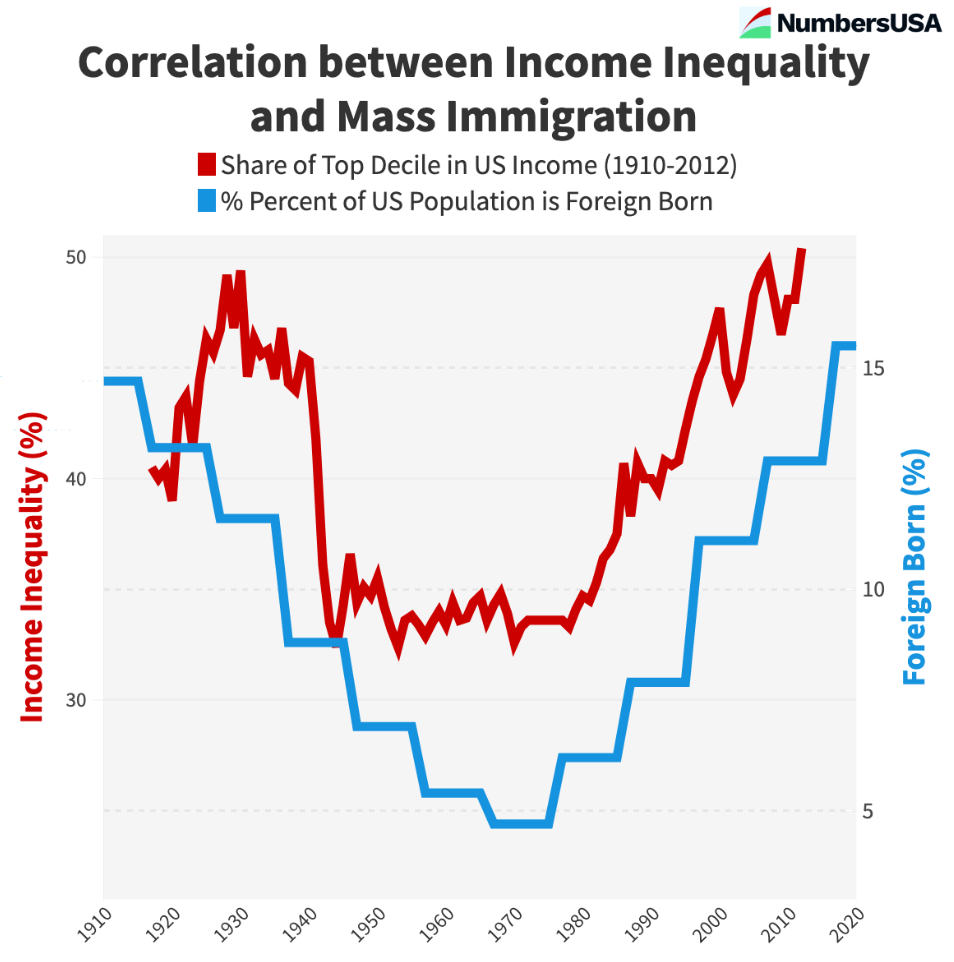
Aug. 25, 1965: Hart-Celler passes House (318-95) on a bipartisan vote. The ink was barely dry on civil rights legislation aimed at breaking down barriers to social equality when Congress erected new barriers to economic equality. Supporters of the Immigration and Nationality Act of 1965—known as “Hart-Celler” after its primary sponsors—assured the public that it would not increase immigration. They were wrong. The law opened the door to an immigration wave unprecedented in modern American history. Decades of declining inequality, an expanding middle class, and shrinking racial wealth gaps were halted and reversed. That wave continues to this day.
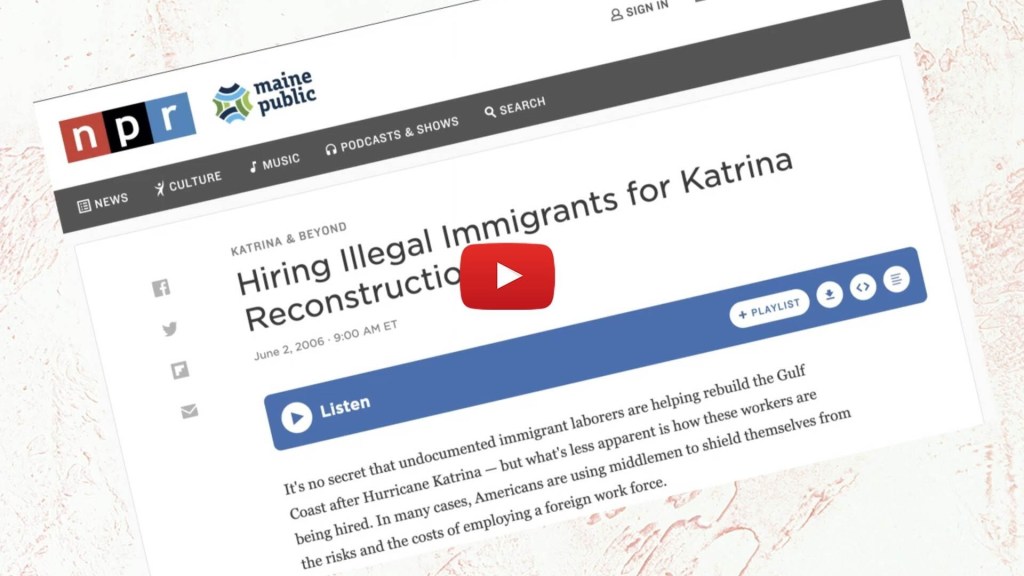
Aug. 29, 2005: Hurricane Katrina makes landfall on the Gulf Coast. In the aftermath, Black Americans were dismissed from job sites by employers who had hired cheaper foreign workers. The Bush administration facilitated the displacement by putting a freeze on workplace enforcement during the cleanup.
Linda Swope, an employment services operator, told the press that the local workers “actually cried” when they were informed that they were being replaced. “And we cried with them,” she said. “I assure you it is not true that Americans don’t want to work.”
Washington, Du Bois, Randolph, and Barbara Jordan blazed a trail for our generation to follow back to an immigration policy that honors the best of our traditions.
For more on these historic dates, see:
- Back of the Hiring Line: Chapter 8 (Randolph; Brotherhood of Sleeping Car Porters); Chapters 4-7 (Du Bois); Introduction & Chapter 17 (Hurricane Katrina)
- Emancipation Reclamation: Pages 18-19 (March on Washington); 36-37 (Randolph’s evolution)
- 60 Years of the Hart-Celler Act and Mass Immigration
In Other News
H-1B: A new rule from DHS could make employers “less likely to hire an H-1B worker over a qualified and highly-skilled American worker.” The 30-day public comment period is open until September 24. If you or someone you know has been affected by the H-1B program, submit a comment.
Asylum Abuse: The State Department is preparing the largest mass visa revocation in American history, according to the Associated Press. They are targeting tourist and business travelers who file asylum claims just to get the work permit and years of de facto residence. This loophole was a major contributor to the 2021-2025 border crisis.
Deportations: ICE arrested nearly 50,000 people in July, as cooperation with local agencies expands. (NYT)
Quote of the Week
“If an American corporation needs workers, it should hire and train Americans.” – Vice President Vance
NumbersUSA In The News
I joined The Bill Martinez Show (47:08 – 59:18) to talk through the Americans First Immigration Act (H.R. 8586), the new H-1B fee, the DNC’s resolution to abolish ICE, and the first principles an immigration system ought to rest on:
“Let’s combine these things: the Barbara Jordan ethos, the J.D. Vance ethos, and then — call it the NumbersUSA ethos — you should not be giving discounts to not hire Americans.”
Townhall‘s Joe Chalfant built a story around our answer to the DNC’s abolish-ICE resolution, calling mandatory E-Verify “the only winning strategy” and citing our count of the 60 members of Congress who have co-sponsored it.
At the Daily Caller, Derek VanBuskirk and I went through Sen. Mike Lee’s Stopping Border Surges Act (S. 5371) in “Closing Loopholes: Inside The Senate’s ‘Premier Bill To Stop The Border Crisis.’” I told him NumbersUSA will advocate for the bill and push our members to ask their representatives to “join that fight, or to explain to their constituents why they don’t think these loopholes need to be closed.”
Not Your Members? | Create Account or Log In to manually enter your address.