Facebook
 Post
Post
 Email
Email
 Print
Print
What a Colorado wastewater accident reveals about population growth, immigration, and water scarcity
Population growth increases demands on water supplies and infrastructure, leaving less margin for error when drought, contamination, or infrastructure failures occur. In Colorado, where water is already scarce, that tradeoff deserves particular attention.
Colorado has added nearly one million residents since 2010. International migration has been a major component of the state’s net migration, meaning federal immigration policy has contributed to growing demands on Colorado’s limited water supplies and infrastructure.
The Spill
On August 26, a wastewater pipe in Pueblo began leaking untreated sewage into the Arkansas River. The leak went undetected until the following day. Once identified, crews stopped the discharge within about two hours, but approximately 4.25 million gallons of untreated sewage had entered the river.
The contamination traveled downstream through the Lower Arkansas Valley to John Martin Reservoir, a major source of irrigation water. Officials warned farmers and recreational users against using affected water and cautioned people against direct contact.
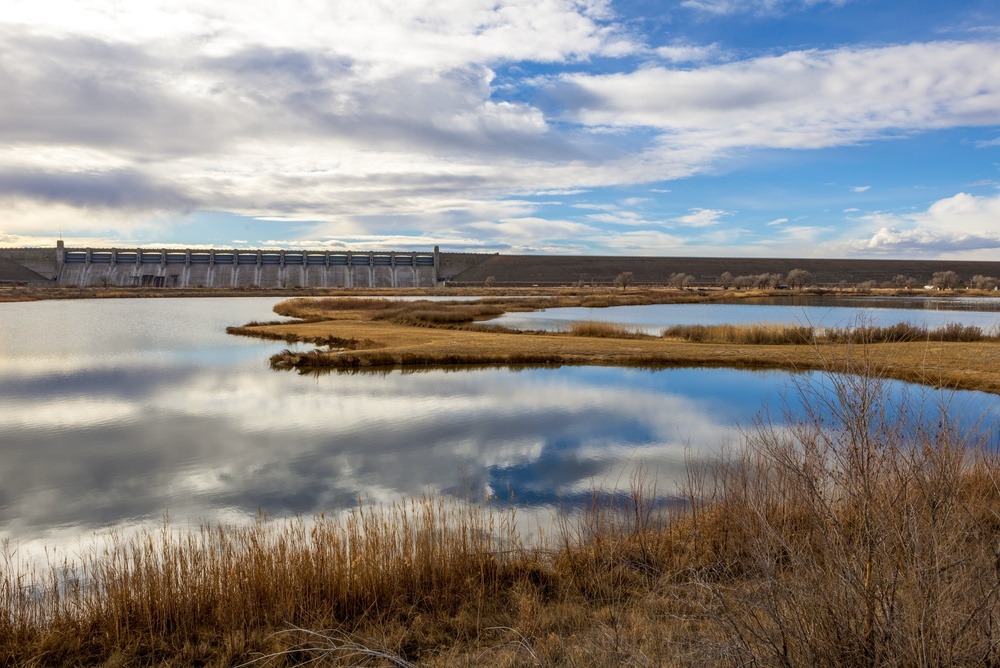
John Martin Reservoir, which was contaminated by sewage-laden water from the Arkansas River following the Pueblo wastewater spill.
An Already Stressed River
The Arkansas River supports irrigated agriculture, recreation, and wildlife across water-scarce southeastern Colorado. When one source becomes impaired, users have few alternatives, magnifying the consequences of contamination.
Officials warned farmers against using contaminated river water. Drought had already forced many growers to rely on groundwater wells, but those wells tap an aquifer connected to the Arkansas River and are subject to pumping restrictions, making groundwater a limited backup.
By September 4, E. coli levels in John Martin Reservoir had returned to acceptable levels, allowing officials to lift the recreational water-contact advisory. But the sewage did not simply disappear: some contaminants flowed through the reservoir, while sewage solids likely settled into bottom sediments.
Less Margin for Error
Colorado’s population increased from 5.03 million in 2010 to more than 6.01 million in 2025 — substantial growth for an arid state where water is chronically tight. In 2024, international migration accounted for approximately 85% of the state’s net migration of 38,860 people.
For a broader look at how population growth has transformed Colorado’s landscape and increased pressures on its resources, see NumbersUSA’s Disappearing Colorado study.
Immigration policy did not cause Pueblo’s sewer pipe to rupture. The broader issue is that decades of population growth have increased water demand and the loads that wastewater systems and other infrastructure must accommodate.
The result is a shrinking margin of safety — and a loss of resilience.
Acknowledging Tradeoffs
Immigration can expand the workforce, tax base, and economy, while the population growth it contributes to also increases demands on resources and infrastructure — an important tradeoff in an arid state.
When something goes wrong, the effects can ripple far beyond the point of failure — from an urban sewer pipe, down more than 75 miles of river, through agricultural communities, and into a major reservoir.
Opportunity to Build Resilience
Slower population growth would not repair Pueblo’s sewer pipes or eliminate drought. But it can buy time to replace aging infrastructure, improve water efficiency, and rebuild safety margins.
Colorado cannot manufacture additional snowpack or guarantee freedom from drought. But policymakers should consider the rate at which water demand grows.
The Pueblo sewage spill is a reminder that resilience depends not only on maintaining infrastructure and protecting scarce resources, but also on the demands placed upon them. Because immigration has been a major component of population growth in both Colorado and the United States, federal immigration policy plays an important role in determining how rapidly those demands grow and how vulnerable water supplies and infrastructure can become.
Not Your Members? | Create Account or Log In to manually enter your address.