Facebook
 Post
Post
 Email
Email
 Print
Print
America’s housing crisis is real, widespread, and getting worse. An American family today needs to earn roughly $110,000 a year to afford a typical home — about 29 percent more than what the median household actually makes. From 2001 to 2024, renter incomes rose by just 9 percent in real terms while rents climbed 30 percent. Millions of families are being squeezed — priced out of homeownership, burdened by rent, and forced into difficult tradeoffs about where and how they live.
The conversation in Washington has focused almost entirely on housing supply: build more homes, cut red tape, reform zoning. Those are legitimate policy conversations. But they leave out half the equation — the demand side. And on the demand side, one factor stands above all others: population growth driven by decades of mass immigration.
More People, Same Housing Stock
Housing affordability is fundamentally a supply-and-demand problem. When more people compete for the same number of homes, prices go up. That’s not a political statement — it’s arithmetic.
Between 2021 and 2025, immigration drove population growth in every single U.S. state. During that time, the U.S. foreign-born population increased by roughly 8.3 million people — the largest four-year increase in American history.
Analysis of HUD’s 2025 Worst Case Housing Needs report stated that immigration-driven population growth accounted for roughly two-thirds of nationwide rental demand growth, nearly all such growth in some high-cost states such as California and New York, and more than half of recent growth in owner-occupied housing costs.
A HousingWire analysis found that total household growth under a lower-immigration scenario would be 20 percent lower than under current immigration trends — translating to roughly 1.7 million fewer new households over a decade. Fewer households competing for housing would reduce pressure on rents and home prices.
The connection is not subtle. When immigration adds millions of new residents to already-strained metropolitan housing markets, the laws of supply and demand do the rest.
Building Won’t Keep Pace
Supporters of the supply-only approach argue that we simply need to build our way out of the crisis. But construction has consistently failed to keep up with immigration-driven demand — and there’s no realistic path to making it do so at current population growth rates.
Realtor.com estimated the cumulative U.S. housing shortfall at just over 4 million units in 2025. Meanwhile, the National Association of Home Builders estimated that roughly 1.2 million additional units are currently needed to restore more normal vacancy rates in metropolitan housing markets.
Meanwhile, the environmental costs of building at this scale are enormous. Every new housing development — subdivisions carved from farmland, sprawl pushing into open space and wildlife habitat — represents a permanent loss of the natural landscape. NumbersUSA’s national sprawl study documents how immigration-driven population growth has already consumed millions of acres of open space, farmland, and habitat. Building our way out of a population-driven housing crisis doesn’t solve the problem — it relocates it, from the housing market to the environment.
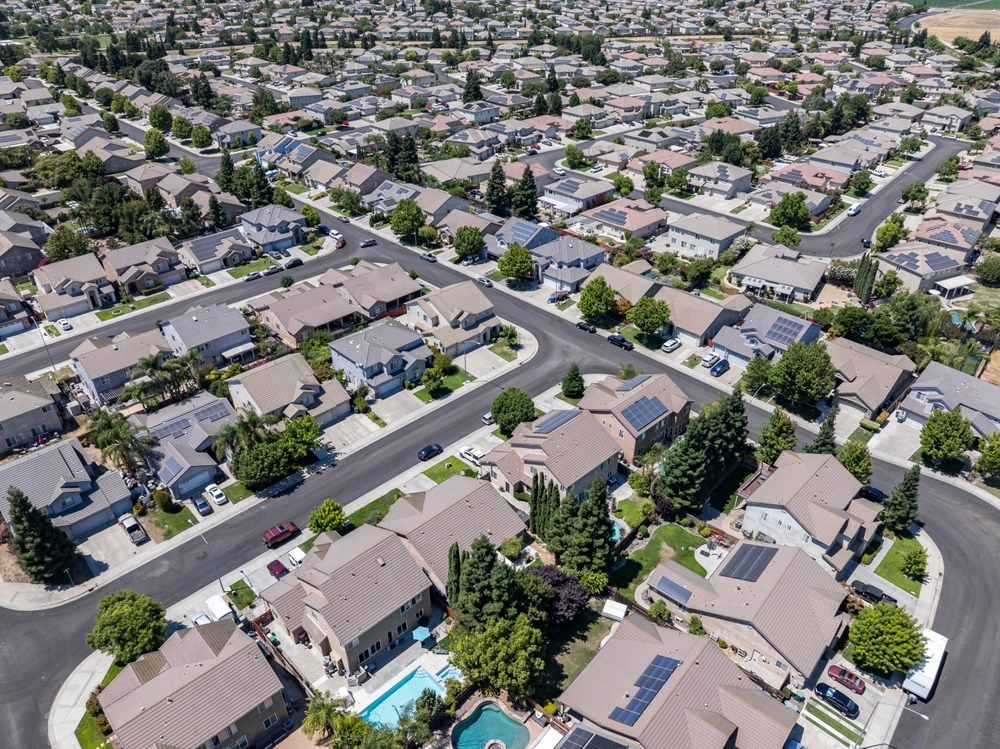
A new suburban subdivision. As population growth increases housing demand, development expands outward—converting open land into homes, roads, and infrastructure.
Congress Is Debating — But Only Half the Problem
Congress is currently focused on housing supply. That’s good, as far as it goes. But lawmakers who are serious about housing affordability need to address demand as well — and that means taking an honest look at immigration levels.
The Americans First Immigration Act (H.R. 8586) would reduce annual immigration to more sustainable levels. Lower immigration means slower population growth. Slower population growth means less pressure on housing markets — less competition for homes, slower rent increases, and a more manageable pace of development. It also means less sprawl, less farmland lost to subdivisions, and more breathing room for the natural environment.
A Structural Solution to a Structural Problem
The housing crisis didn’t emerge overnight, and it won’t be fixed by tinkering at the margins. Americans are being priced out of homes in cities and suburbs across the country — not just because builders haven’t kept up, but because decades of immigration-driven population growth have placed ever-increasing demand on a finite housing stock.
Congress has an opportunity to address the demand side of the crisis. Urge your Representative to cosponsor H.R. 8586 and take a serious, comprehensive approach to housing affordability — one that accounts for the full scope of the problem.
Not Your Members? | Create Account or Log In to manually enter your address.